
My Malagasy Heritage: A Blend of Southeast Asian and African Roots

Updated: Oct 8

As a descendant of the Malagasy people, I am part of an extraordinary heritage that reflects one of the most unique examples of human migration, cultural fusion, and linguistic diversity in the world. The Malagasy are the Indigenous people of Madagascar, an island nation located off the southeastern coast of Africa in the Indian Ocean. Our ancestry is primarily a blend of Southeast Asian (Austronesian-speaking) and East African (Bantu) origins.

Genetic Admixture: Interpreting My Family’s Malagasy DNA
Modern genetic analysis supports these ancestral narratives. In my own family’s DNA results, we see clear signals of this mixed ancestry. On 23andMe, the ethnicities used to represent Malagasy lineage are Congolese & Southern East African, as well as Southeast Asian (Filipino/Austronesian, Indonesian, Khmer, Thai, and Myanmar), and broadly East Asian.


This is my 2nd cousin's genetic community on 23andMe. Both my mother and my aunt have Southern East African, Angolan & Congolese ancestry on 23andMe, as well as Southeast Asian, but do not have specific African genetic communities within this region (yet). This could also be because I am not currently paying for the premium, which would allow me to access all matched genetic communities. It is essential to examine the genetic communities of close DNA matches, as patterns of DNA inheritance can lead to different outcomes for individuals within the same family. The absence of a specific ethnicity in one person’s DNA test does not necessarily mean that ancestry from that region is not present in the family. Genetic inheritance is variable, and such ancestry may be reflected in the DNA results of other relatives. Under the Khoisan, Shona, & Nguni peoples genetic group, the Zulu people are mentioned. My aunt receives Southern Bantu ethnic group as an ethnicity on her AncestryDNA report, and she shares DNA with at least one person in AncestryDNA's reference panel who is of Zulu descent. This does not mean she has a Zulu ancestor; it's likely from her Malagasy ancestry.

These are ethnicities my mother and father received. I am including them because Malagasy cousins also show these ethnicities. My parents also received these ethnicities due to having multiple Bantu-speaking ancestors such as Makua from Mozambique. Our Bakongo ancestors, who lived in what is present-day Democratic Republic of Congo (DRC), are also Bantu-speaking, among others.


DNA Genics



These are the results of one of the admixture calculators on DNA Genics from uploading my mom’s DNA. I only showed her East African, South Asian, and Oceania percentages because they are relevant to her Malagasy lineage; however, she also received West African, European, and North & South America percentages, representing her Native American heritage, on this calculator. I’m not showing these percentages to promote Blood Quantum; I do not subscribe to that, and there’s no such thing as being a percentage or a fraction of a race/ethnicity.

My aunt having Southeast Asian ancestry on the X chromosome is significant because the X chromosome follows a different inheritance pattern than the autosomes. She also shows this ancestry on chromosomes 3, 8, 9, and 17, but the X chromosome is particularly informative. Unlike autosomal DNA, which recombines and dilutes each generation, the X chromosome undergoes fewer recombination events and can preserve older ancestry signals more clearly (Jobling & Tyler-Smith, 2017). This indicates that the Southeast Asian ancestor represented on her X chromosome is a genuine inherited contribution rather than a random trace. In our case, this ancestor is also linked to Malagasy ancestry. My mother, by contrast, shows broadly East Asian ancestry on her X chromosome (illustrated below). Although my mother and aunt are full siblings, DNA inheritance causes siblings to inherit different admixture segments. My mother still carries Southeast Asian admixture, which also shows on DNA tests in multiple chromosomes; she also inherited East Asian ancestry on the X chromosome that my aunt did not. The East Asian DNA my mom shows could account for the unassigned DNA my aunt has in 23andMe. My mom also shows East Asian on chromosomes 5, 15, and 17. These two ancestry signals (East Asian and Southeast Asian) appear on different segments and chromosomes in my mom and aunt, further supporting that they come from two distinct ancestors rather than one blended lineage.


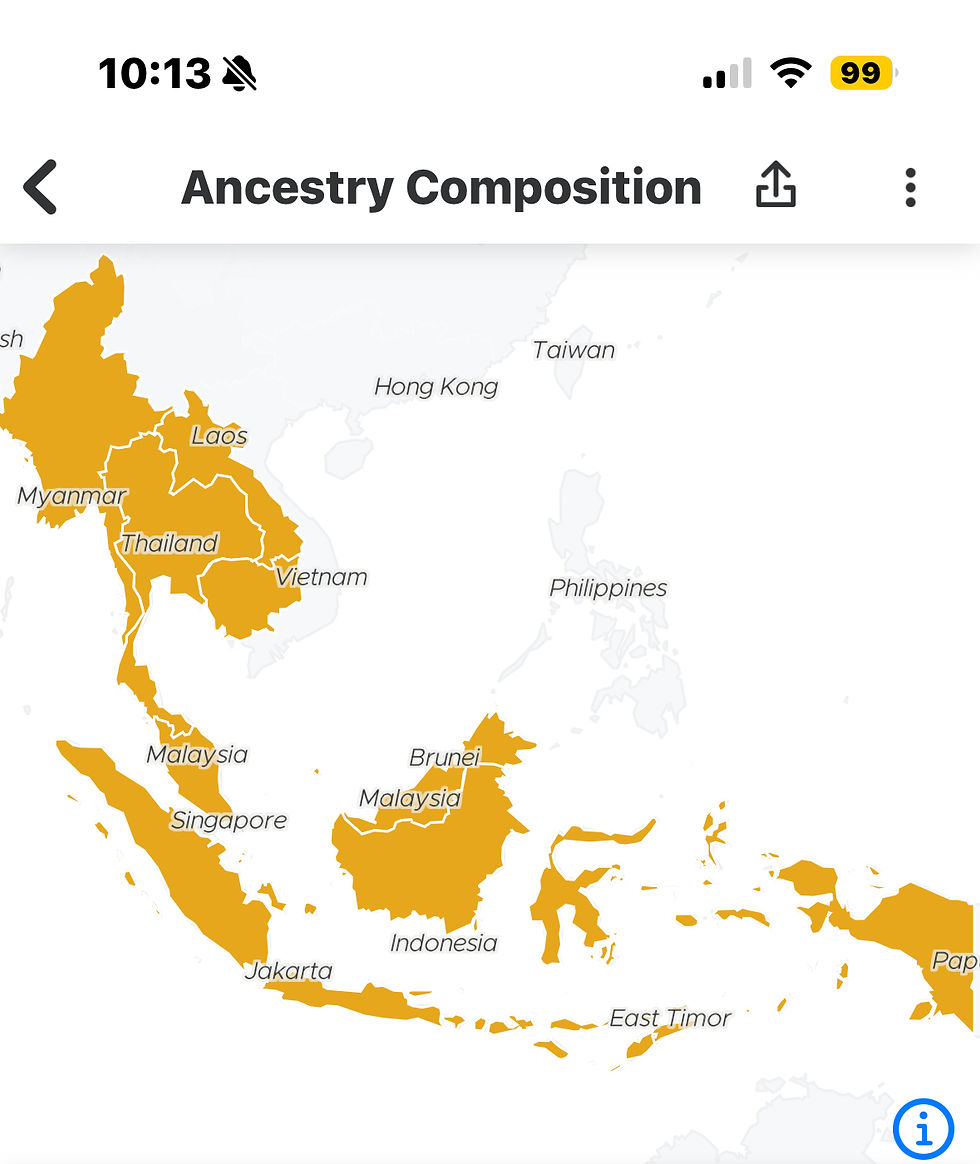
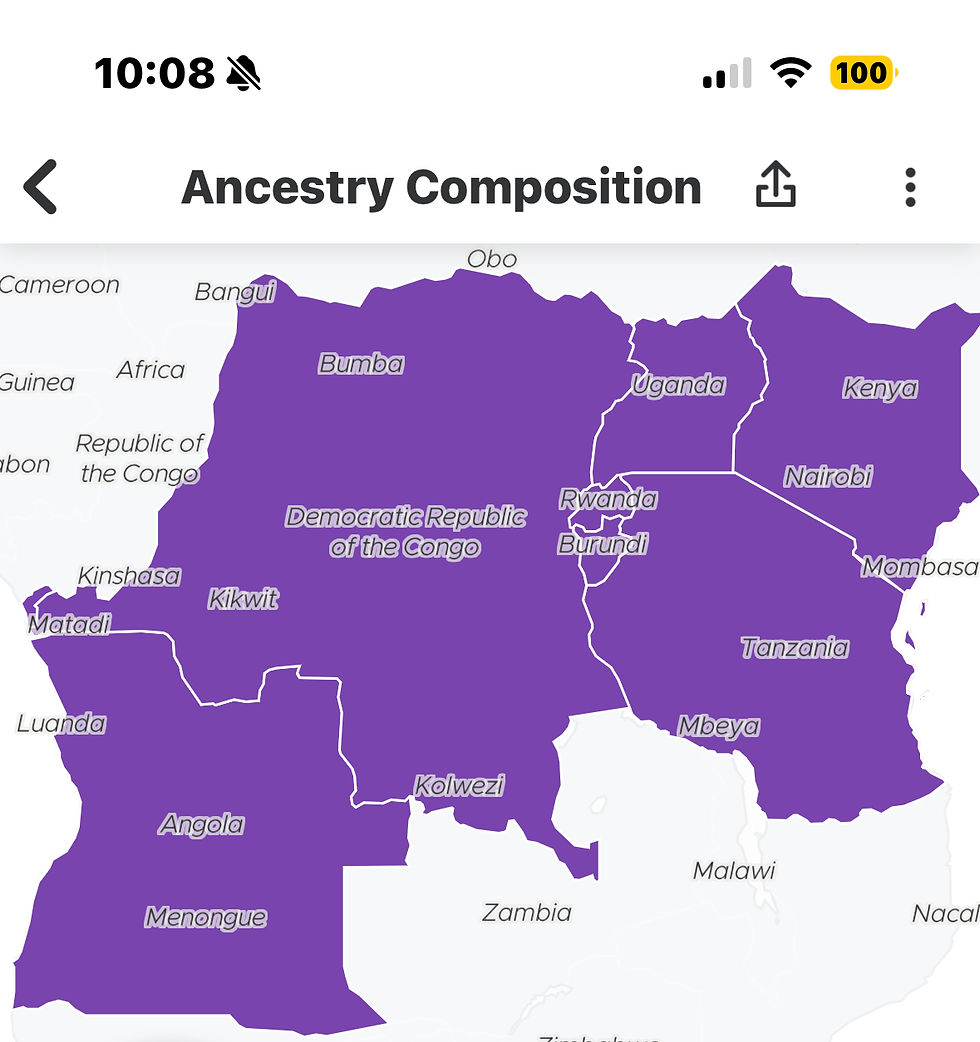
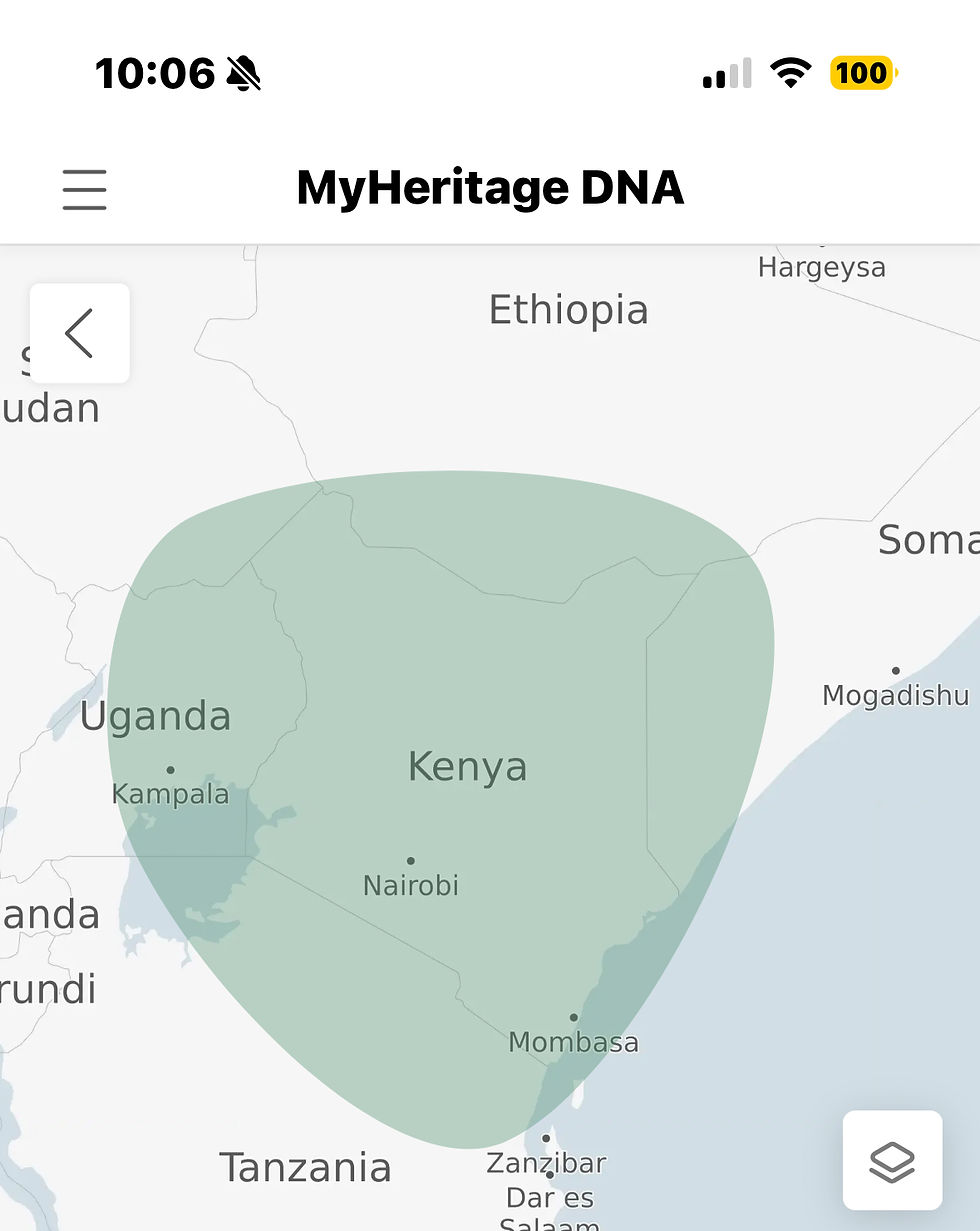


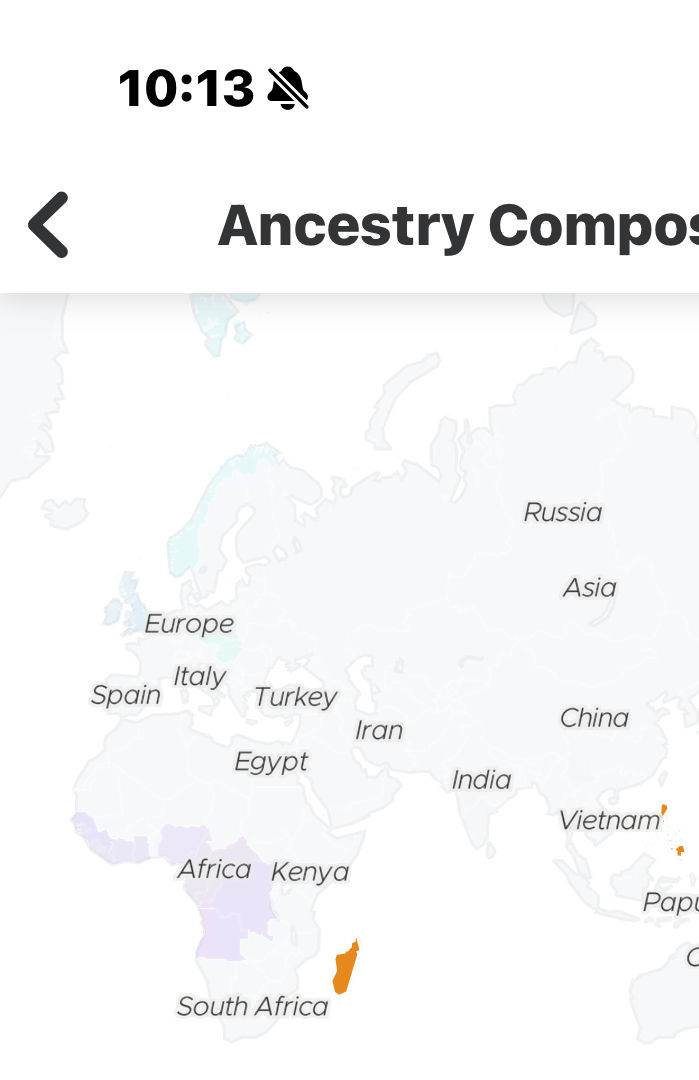


I am showing my parents' DNA Maps across multiple DNA testing sites (23andMe, AncestryDNA, MyHeritage), because we can see the East African component (such as Kenya, Malawi, Mozambique, etc) highlighted, and we also see the Southeast Asian component highlighted ( such as the Philippines, Indonesia, Thailand, etc). On 23andMe, Madagascar is highlighted on my parents' DNA Maps.

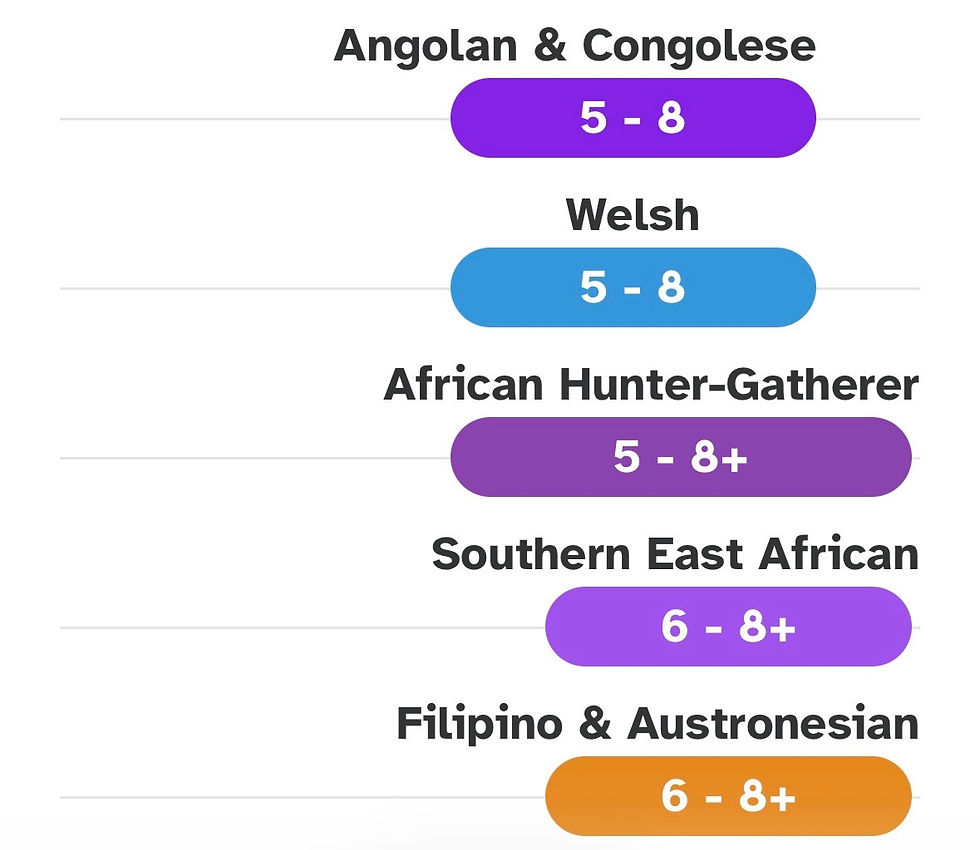
These percentages reflect the typical Malagasy genetic blend: a combination of East African Bantu and Southeast Asian Austronesian. Both my mom and dad have Malagasy DNA matches and DNA cousins who are related through shared Malagasy lineage with the maternal haplogroups M23 and B4a1a1.


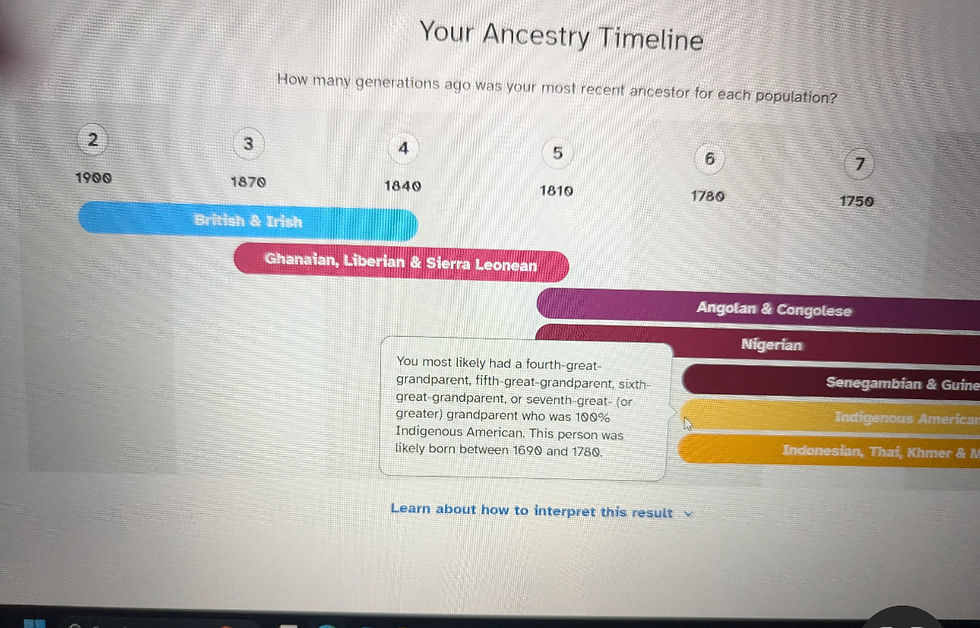
According to my 23andMe Ancestry Timeline, an ancestor categorized as “Filipino & Austronesian” and “Indonesian, Thai, Khmer, and Myanmar” for my parents would have lived between 1700 and 1780. This label, however, represents only part of the picture. The Malagasy people descend from both East African (Bantu) and Austronesian populations, so my Malagasy ancestors have both of these lineages. Since 23andMe distinguishes East African ancestry from Filipino and Austronesian ancestry, the presence of both indicates that my most recent fully Malagasy ancestors on both sides of my family lived earlier.
Over time, my Malagasy ancestors’ descendants intermarried with West and Central African, European, and Native American populations, creating the diverse genetic makeup present in my parents and all four grandparents today. Because DNA is passed down through recombination, each person inherits a random mix of genetic material from their ancestors. This process explains why different percentages and categories appear in modern DNA tests in descendants of my shared Malagasy lines, and why ancestry labels can vary even among close relatives.
DNA Matches:
Note: Names, faces, and identifying details are excluded to protect the privacy of those involved.


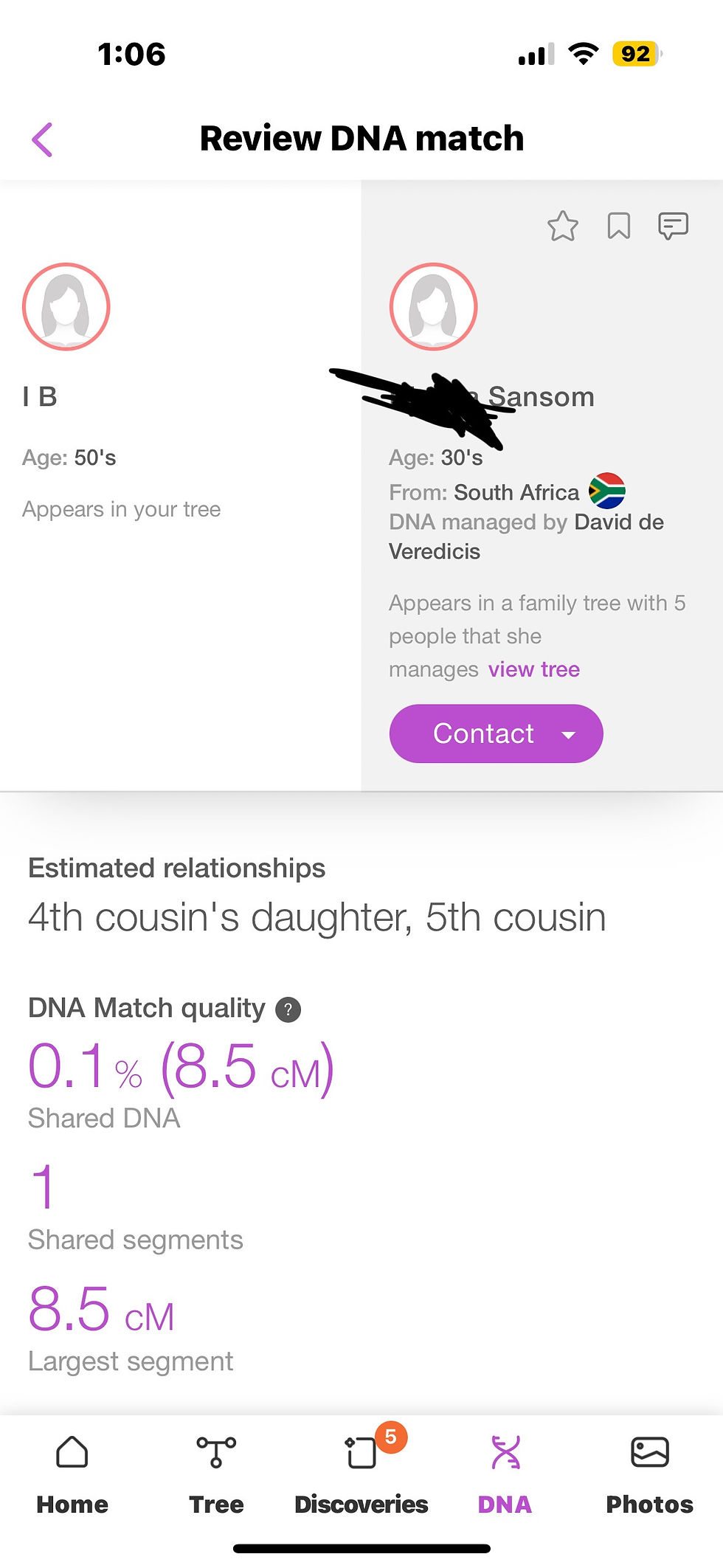
My DNA matches reveal a widespread network of descendants linked to a likely shared Malagasy ancestor. These include Afrikaners in South Africa (with Colored ancestry), as well as African Americans, White Americans, Europeans, and Latinos. I share over 56 DNA matches in common with this line. Multiple overlapping matches across platforms reinforce this connection, indicating a robust genealogical link.
When researching Malagasy ancestry, it’s crucial to look beyond ethnicity estimates or phenotypes and to examine both DNA matches and genealogical records. Many significant connections are found in locations tied to the Indian Ocean and European colonial networks, including Mauritius, St. Helena, Réunion, Mayotte, Seychelles, and France.
Some of the most important relationships in South African colonial genealogies show the complex intersections of enslavement, migration, and intermarriage:
• Certain South African DNA matches today are identified as Dutch, but they also carry Malagasy ancestry through an enslaved woman named Diana. Some of these descendants are linked to Dutch settlers/enslavers who traveled to Mauritius and Madagascar.
"Since the 17th century, the island of Madagascar was a major area for slave trade in the south-western part of the Indian Ocean. The Anglo-American slavers rounded the Cape of Good Hope in order to exploit the island and introduce Malagasy slaves into the colonies of the New World." Pg.593, Chapter 35, Slaving in Madagascar: English and Colonial Voyages in the Second Half of the 17th Century A.D., Liliana Mosca
• Others descend from Lysbeth/Annike van Bengale, a woman from Bengal who was brought to the Cape of Good Hope and owned by Dutch settlers. After being freed, she married a Dutch man and had children, creating a line of descendants still traceable today.
• Some descend from Catharina van Malabar, a woman born in India and trafficked to the Cape. She married the Dutch enslaver Cornelis Claasz and had seven children. Claasz had earlier fathered a child with Isabella, an enslaved Indigenous African woman from Angola, displaying the overlapping relationships between European settlers and enslaved women from diverse regions.
• Others descend from Krotoa (Eva) van die Kaap / Meerhoff (1643-1674), an Indigenous woman from the Goringhaicon clan of the KhoiKhoi people. She was raised in the household of Jan van Riebeeck, became an interpreter, and married Pieter Meerhoff, a Danish surgeon employed by the Dutch East India Company (VOC).

This likely explains why Khoisan, Angolan, and other admixtures, such as South Asian/Southeast Asian, show up on DNA tests. These relationships are significant because they reflect how enslavement, colonial migration, and intercultural marriage shaped genealogical lines in Southern Africa and the broader Indian Ocean world. Understanding these connections is important when tracing Malagasy ancestry, as descendants may appear across multiple continents and may carry DNA from unexpected places due to the complex history of the VOC, slave trade, and colonial settlements.
According to archival research summarized by Howard Thomas (2013), Diana, recorded as Diana van Madagascar, was a Malagasy woman enslaved at the Cape of Good Hope in the late seventeenth century. She entered the Cape through the Dutch East India Company (VOC) system and was sold there in 1686 at around twenty-two years old. Like many Malagasy captives, she was taken from Madagascar through regional trading networks supplying enslaved people to VOC-controlled ports.
Diana passed through multiple enslavers at the Cape, and in February 1687 gave birth to a daughter, Susanna, whose father was a nearby European settler. Diana herself was likely not baptized, meaning no legally recognized marriage could occur under colonial law, though Susanna was acknowledged by her father (Thomas 2013).
Diana’s life must also be understood within the broader Cape slave trade. As South African History Online notes:
“The slaves that came to the Cape were brought here in three ways: firstly through voyages sponsored by the Dutch East India Company VOC which sent slave ships from the Cape, primarily to Madagascar and outlets on the south-eastern coast of Africa; secondly through VOC ‘return’ fleets sailing from Ceylon, present day Sri Lanka, and the East Indies back to the Netherlands and brining a few personal slaves from that region with them; and lastly from foreign slavers en route to the Americas from Madagascar, Mozambique and East Africa who sometimes sold a few slaves in the Cape before heading off to the great slave markets of the Americas.”— South African History Online, 2015
This final route explains how Diana’s relatives were likely trafficked onward to the Americas, while others remained in South Africa. Combined with DNA evidence and Dutch settler endogamy, this likely explains why I am DNA matching her descendants.
The screenshots show my parents’ DNA matches with relatives of Asian (Filipino, Chinese, Korean, Merina Malagasy, Mauritian) and Pasifika (Chamorro from Guam, Native Hawaiian, and Māori) backgrounds, connected through our shared Austronesian ancestry. I have been able to reconnect with some of these relatives and remain in contact with them.
“I should add here, in deference to my Boricua roots, that Malagasy slaves entered the Spanish and French speaking Caribbean during the entire Transatlantic Slave Trade. France was complicit thoughout the slave trade which actually saw the first Malagasy slaves sent to Quebec, Canada as early as 1623. France also colonized Madagascar and enslaved Malagasy were also sent to the Indian Ocean islands of Mauritius, Reunion, and Seychelles, Southeast Asia and elsewhere. Spanish slave traders bought and sent enslaved Malagasy throughout the Spanish empire. Under Spanish colonial rule, Malagasy slaves were sent to Mexico, Central America, Southwest and Central United States, Spanish Florida, the Philippines and other Pacific Islands in addition to the Spanish-speaking Caribbean. Catalan slave traders were also sailing to Madagascar in the early-1800s and directly shipping slaves to Cuba. Those slaves may have also ended up in Puerto Rico and the Dominican Republic.”-Vega, Teresa. "Part II: The DNA Trail from Madagascar to Manhattan—Our Family's Malagasy Roots." Radiant Roots, Boricua Branches, 2013. Could this explain certain DNA matches? Possibly.


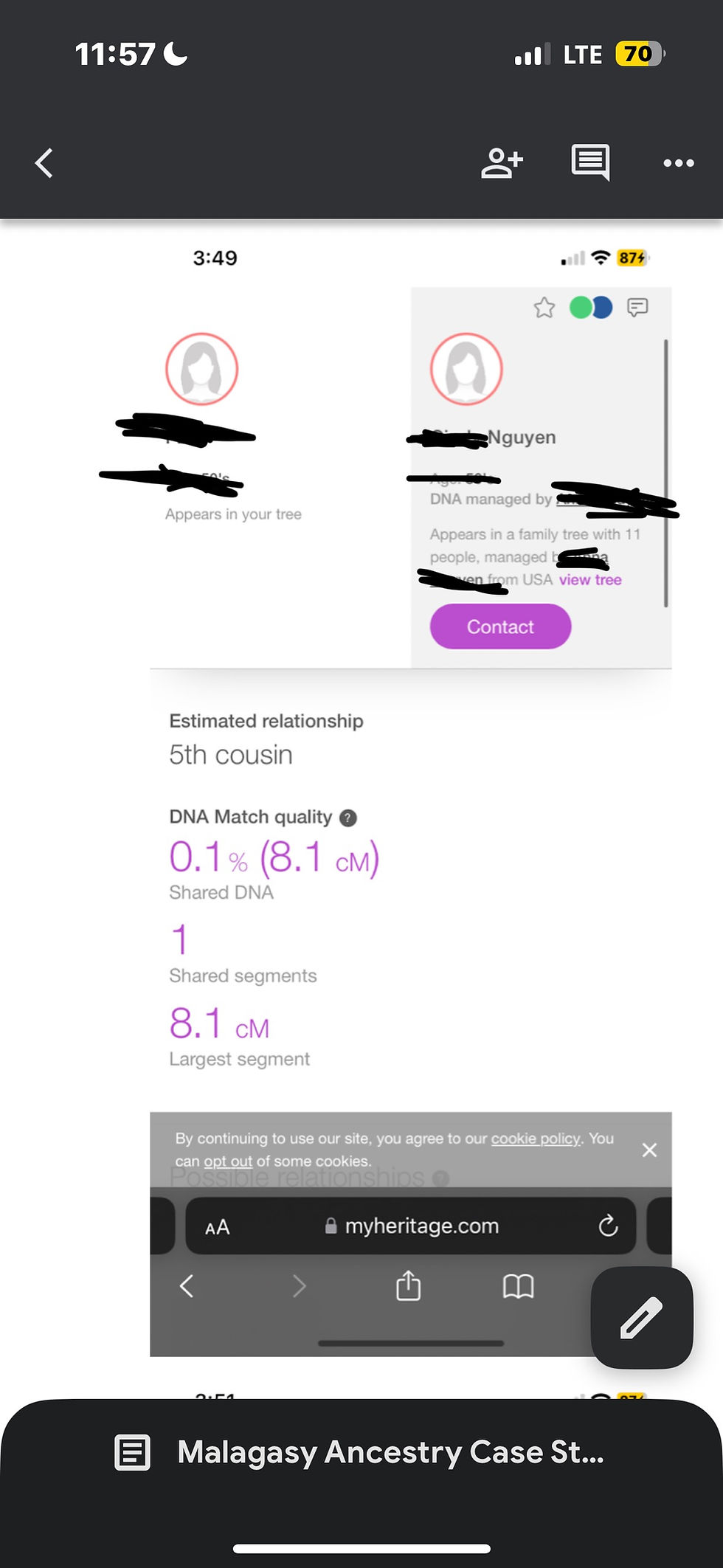
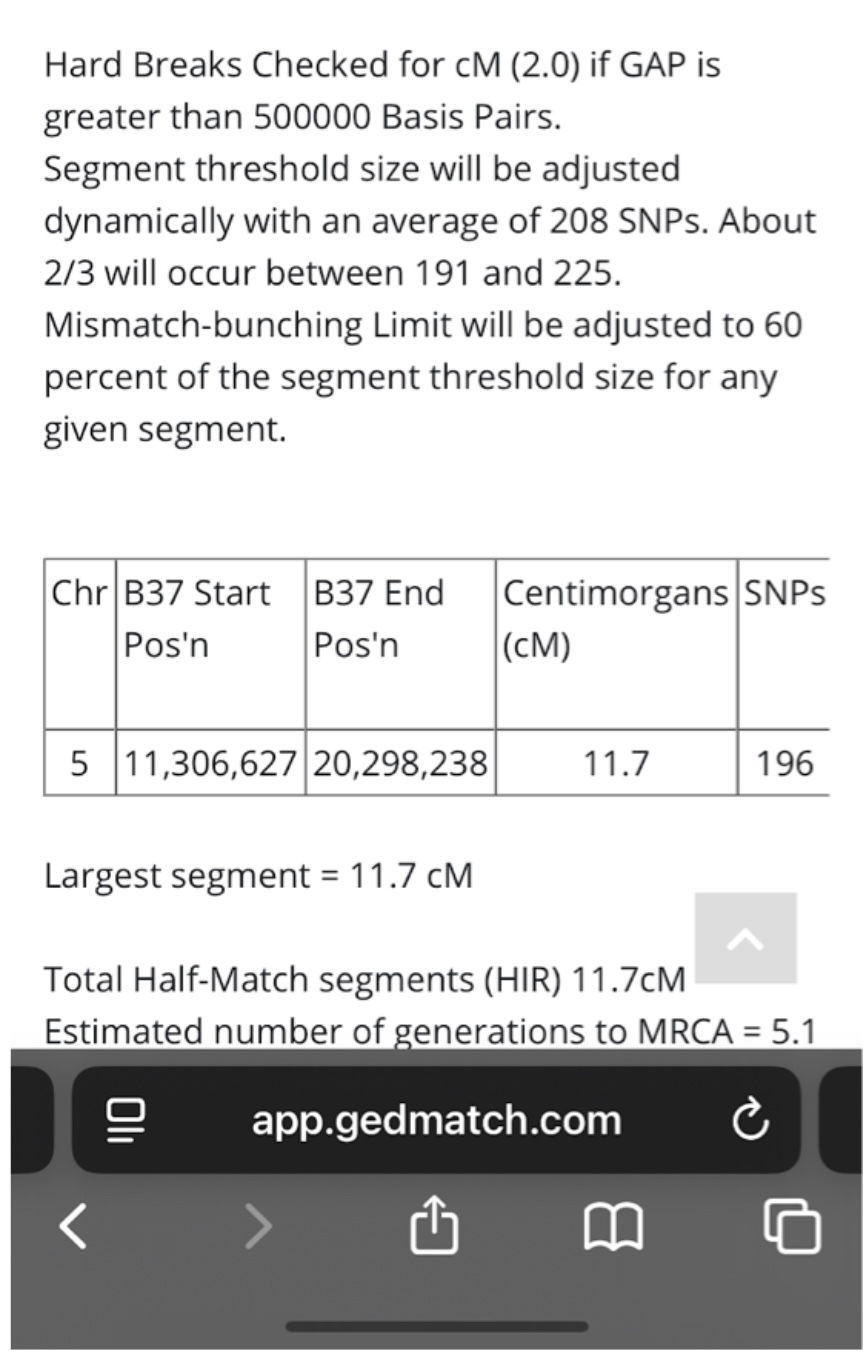

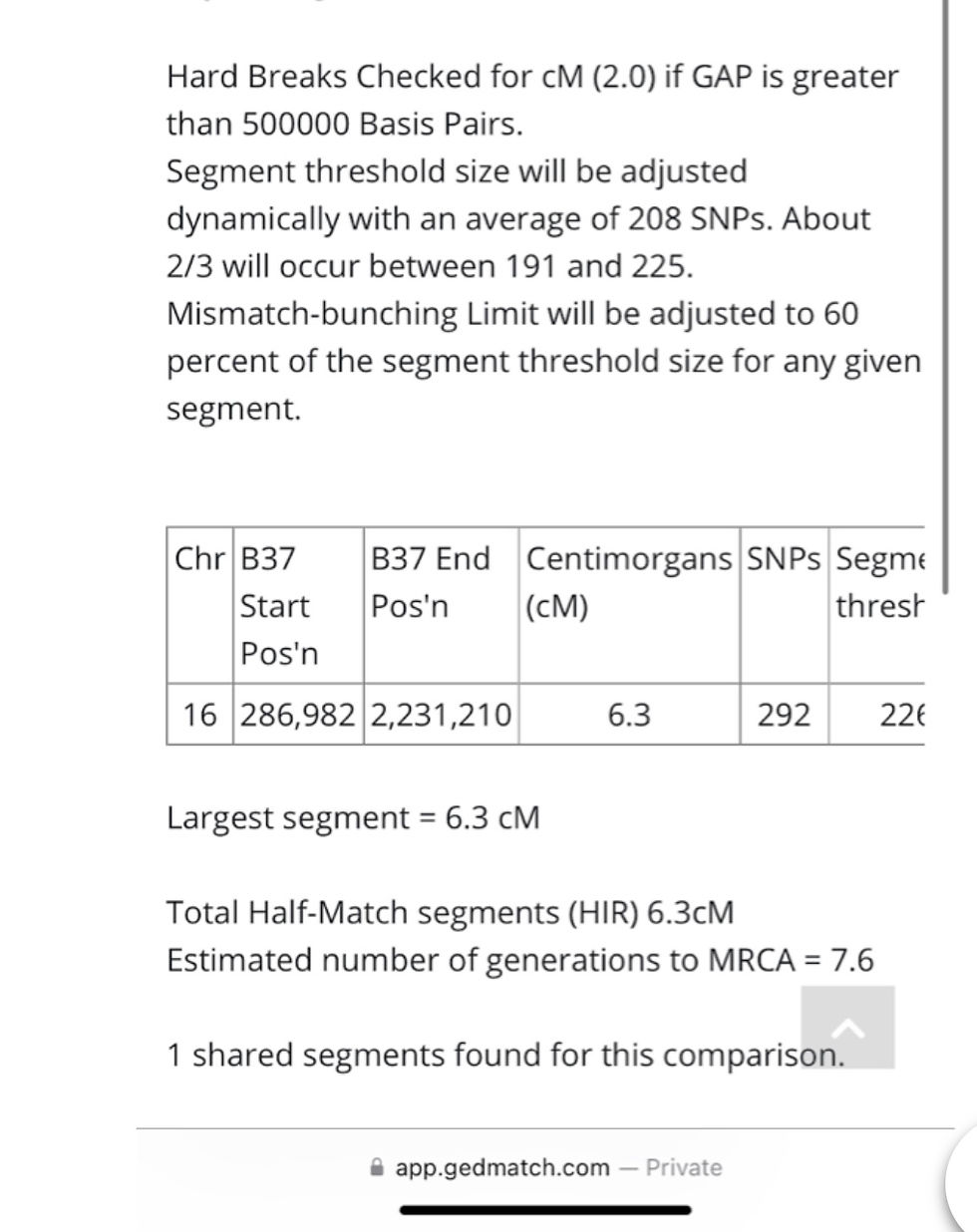

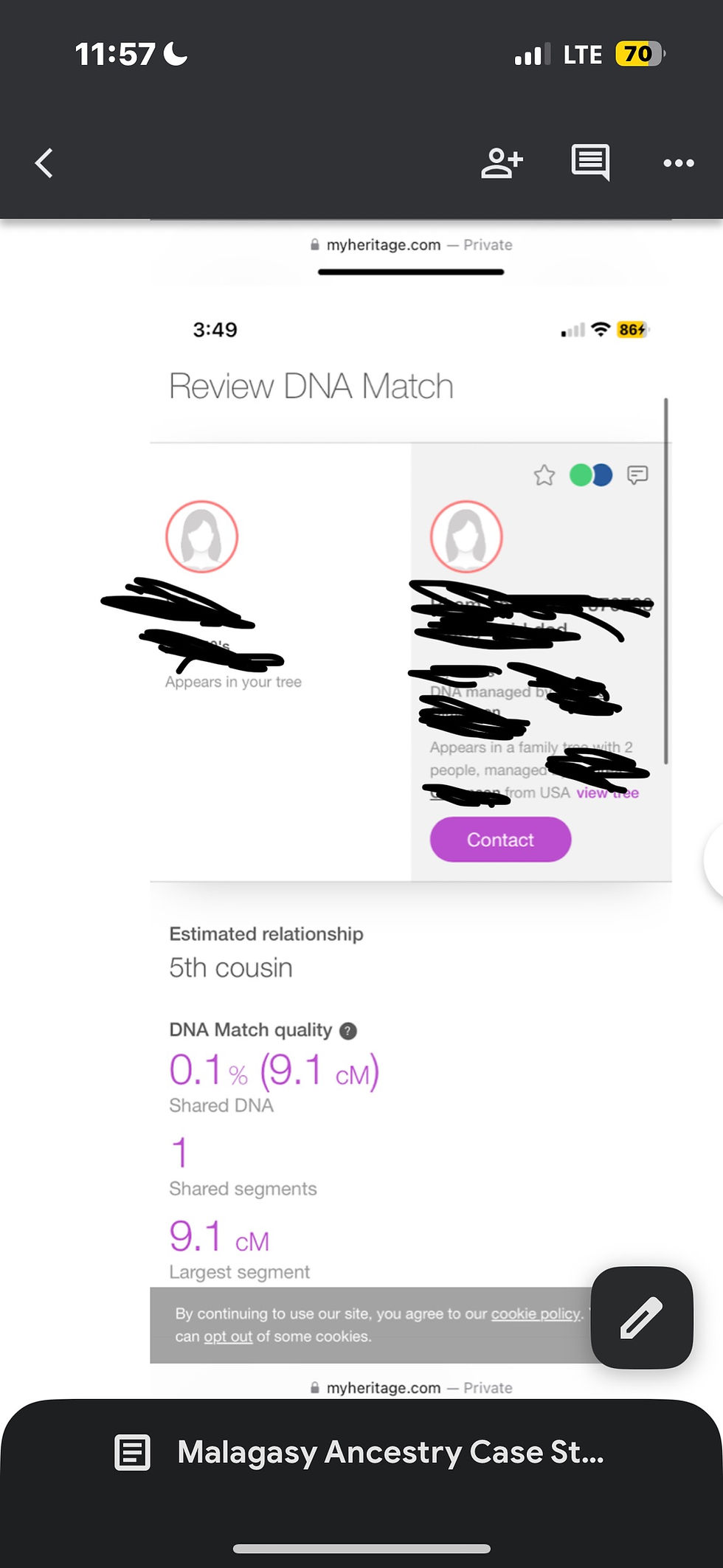


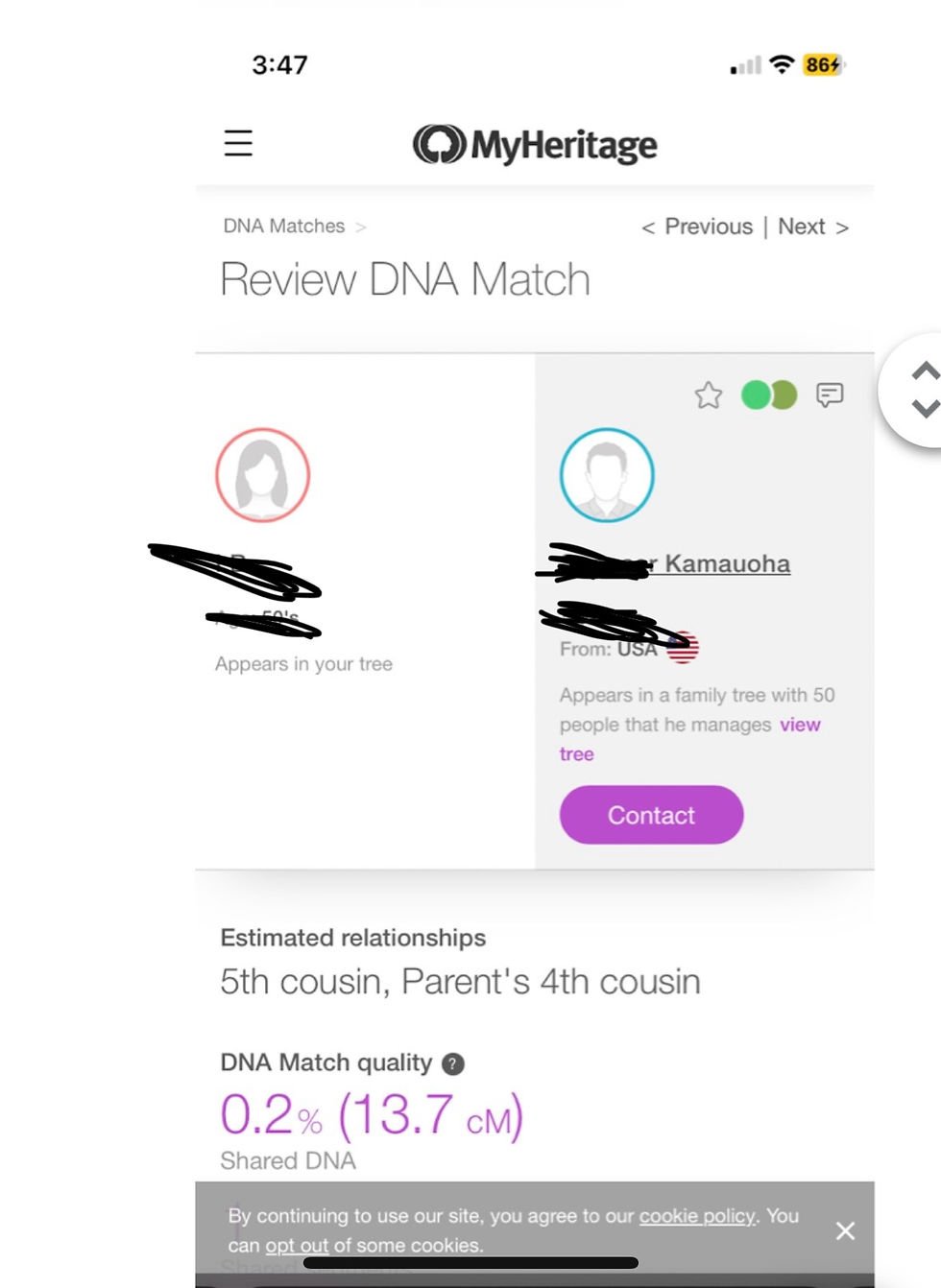
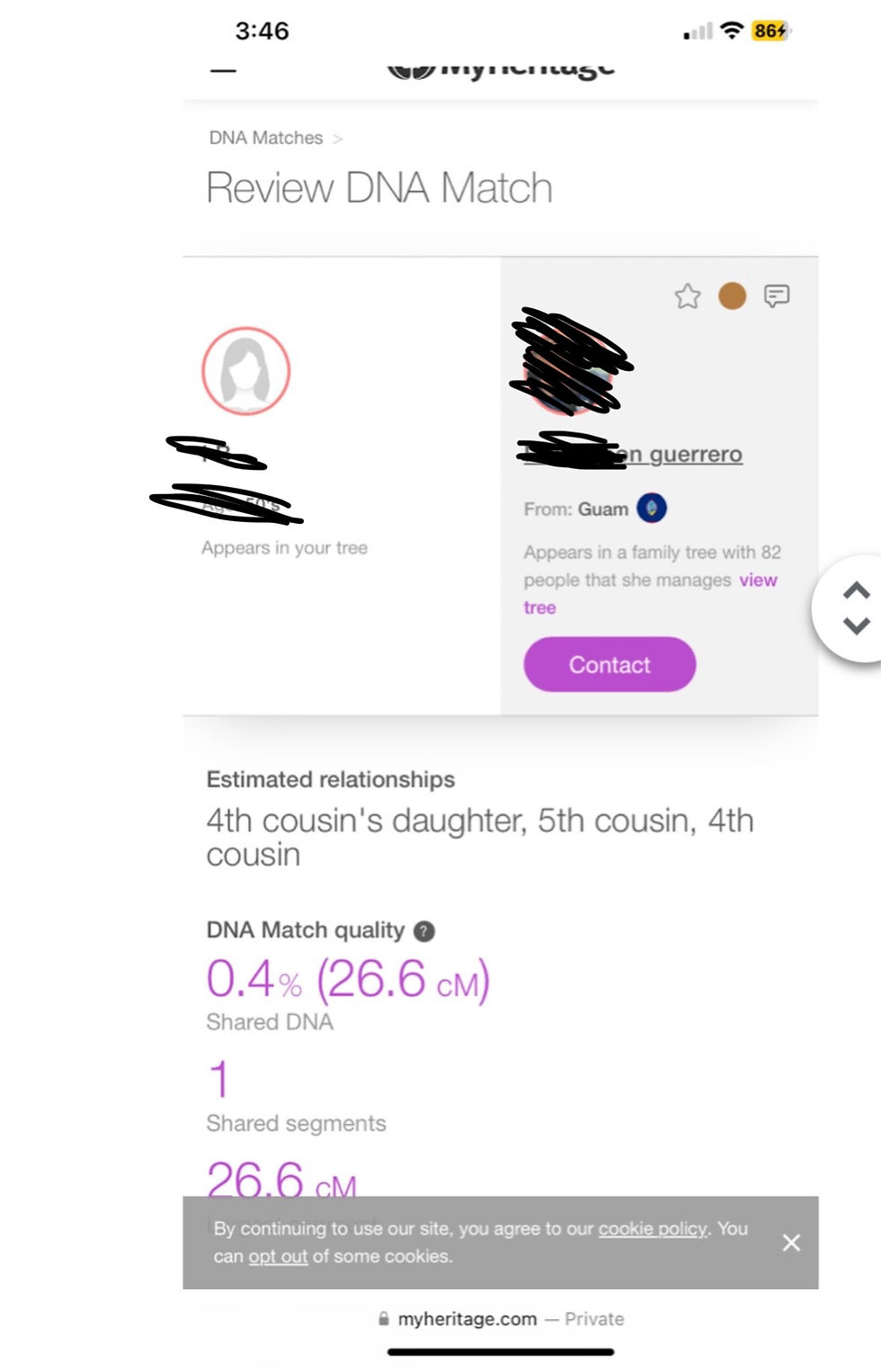
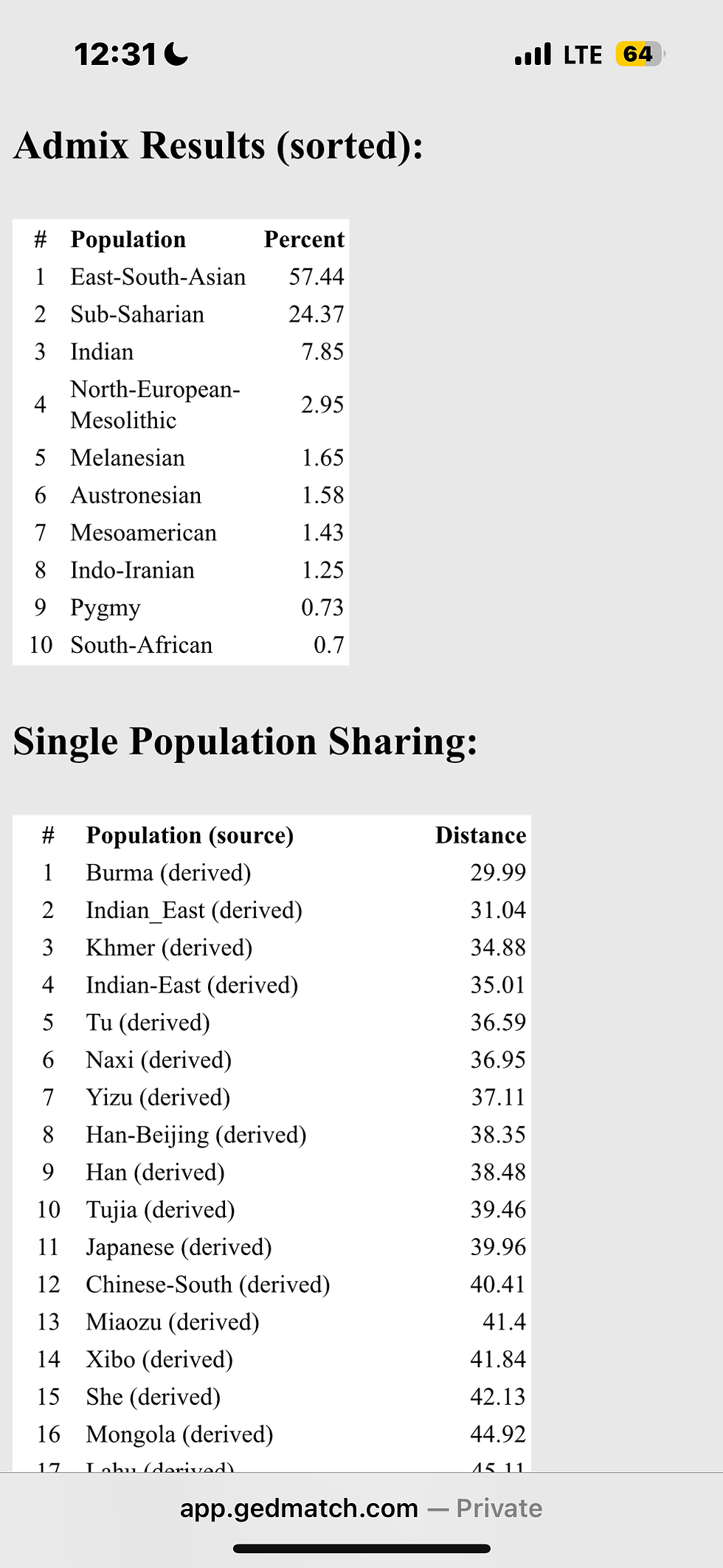
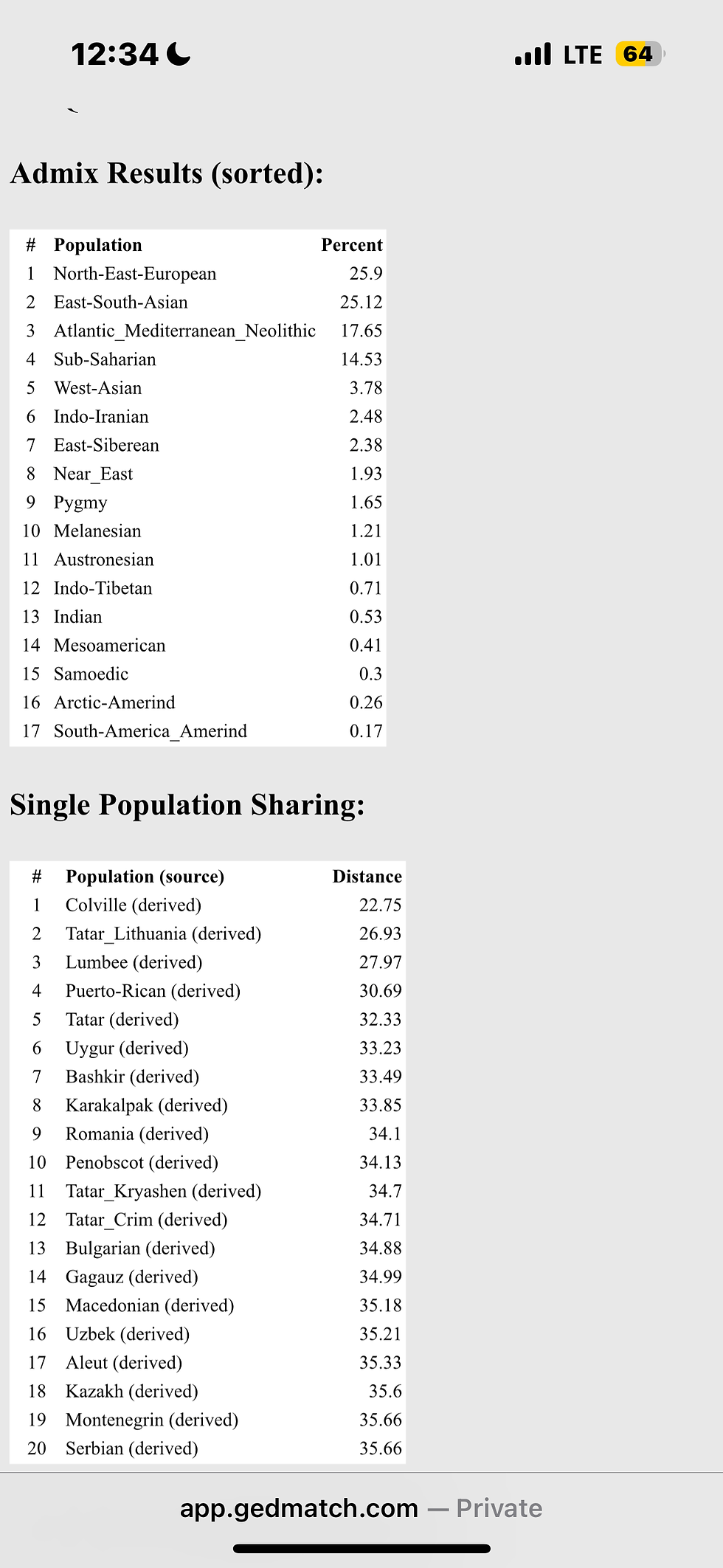
Admixture calculators of some DNA matches:

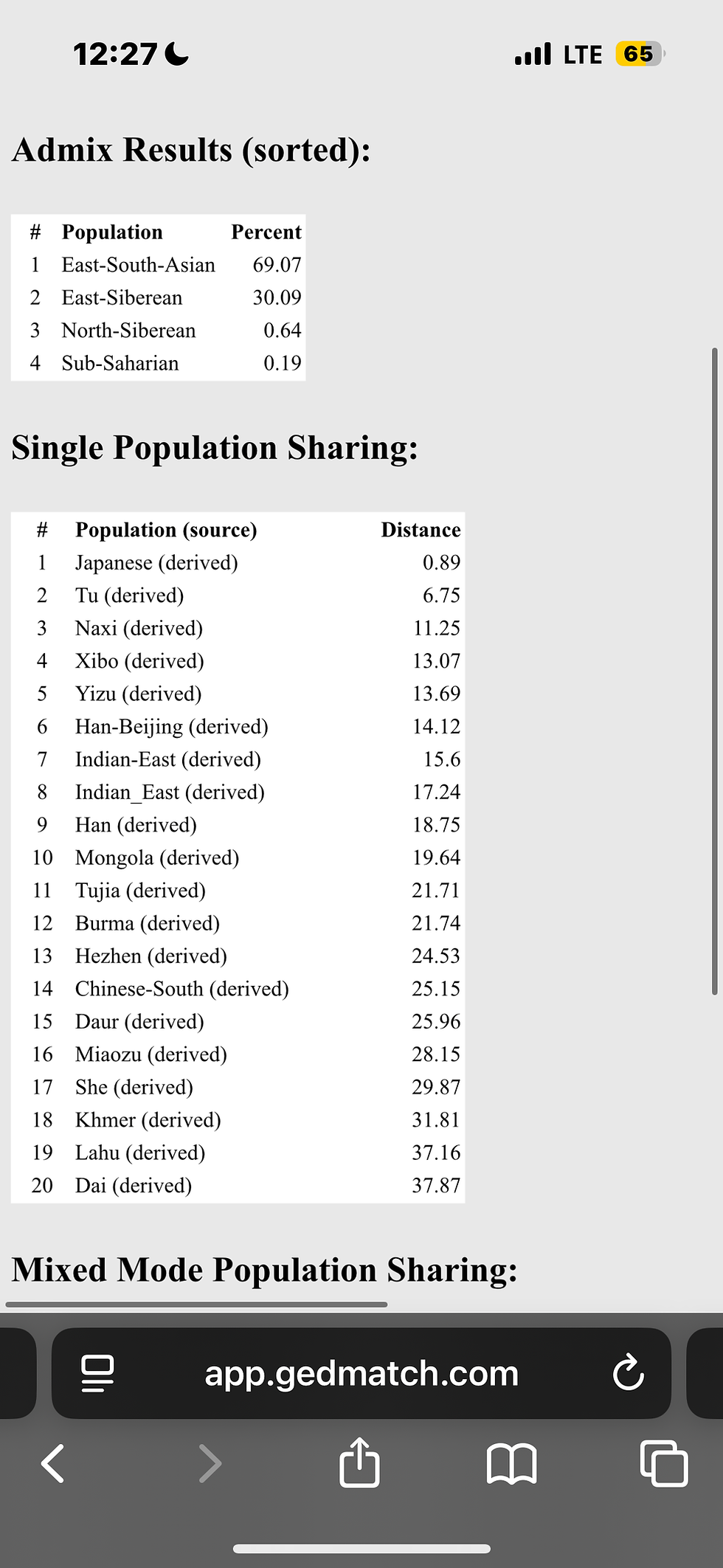
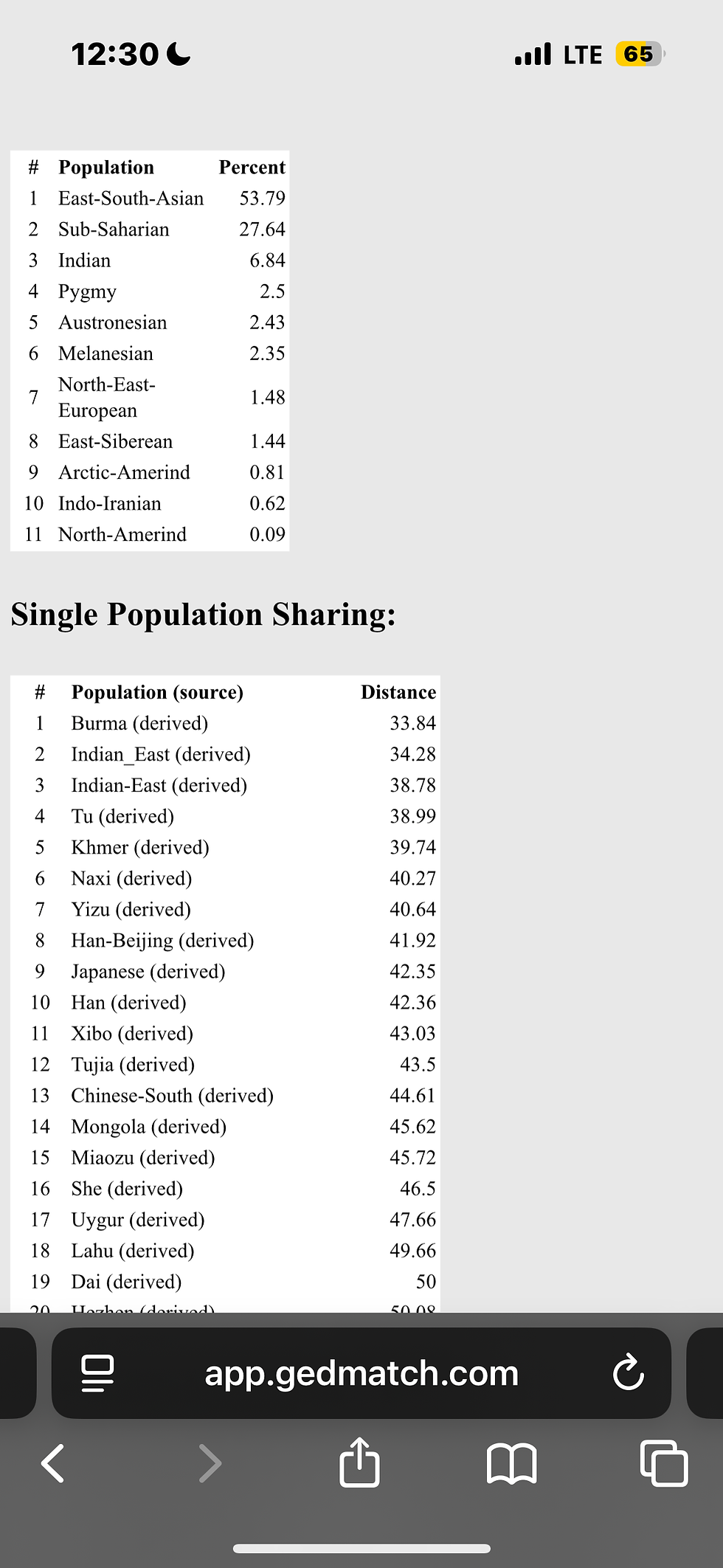
Ancient DNA matches:
This report from DNAgenics functions in the same way as 23andMe’s Historical Matches and MyTrueAncestry Deep Dives, by identifying overlapping DNA segments between my parents’ genomes and ancient samples. These shared segments, measured in SNPs and percentages that can be converted into centimorgans (cM), provide evidence of very distant common ancestry with ancient individuals from specific archaeological cultures.
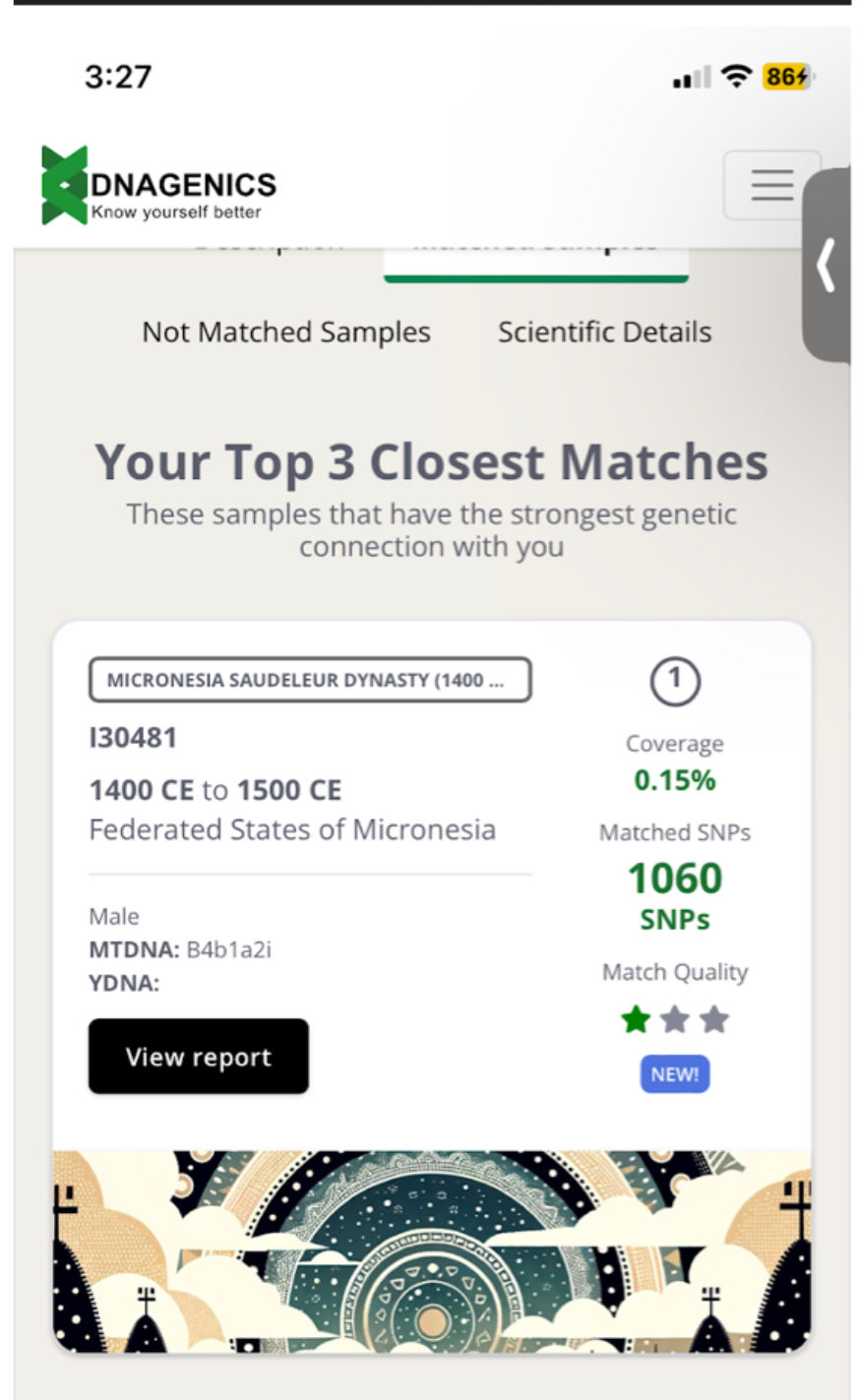


My father’s DNA results from DNAgenics reveal ancient genetic matches to individuals from the Latte Culture of Guam (1200–1650 CE), the First Peoples of Vanuatu (1680-1950 CE), and the Saudeleur Dynasty of Micronesia (1400–1500 CE). These connections display a common Austronesian ancestry that directly ties into my Malagasy heritage. The amount of shared DNA ranges from about 2 to 11 centimorgans (cM), yet even distant fragments like these are significant because they point to a shared ancestral population. The common ancestors behind these connections would have been part of the seafaring Austronesian communities who expanded out of the islands in Southeast Asia beginning around 1500–1000 BCE. These ancestors likely came from cultures in Taiwan and the Philippines, carrying with them the Malayo-Polynesian languages, farming practices, and maritime traditions that spread westward to Madagascar and eastward into Micronesia and Polynesia. In this way, the DNA my father carries preserves a link to the same Austronesian voyagers whose descendants shaped both Malagasy society in the Indian Ocean and Pasifika cultures across Oceania. I will go over the specifics of a few of the DNA matches below.

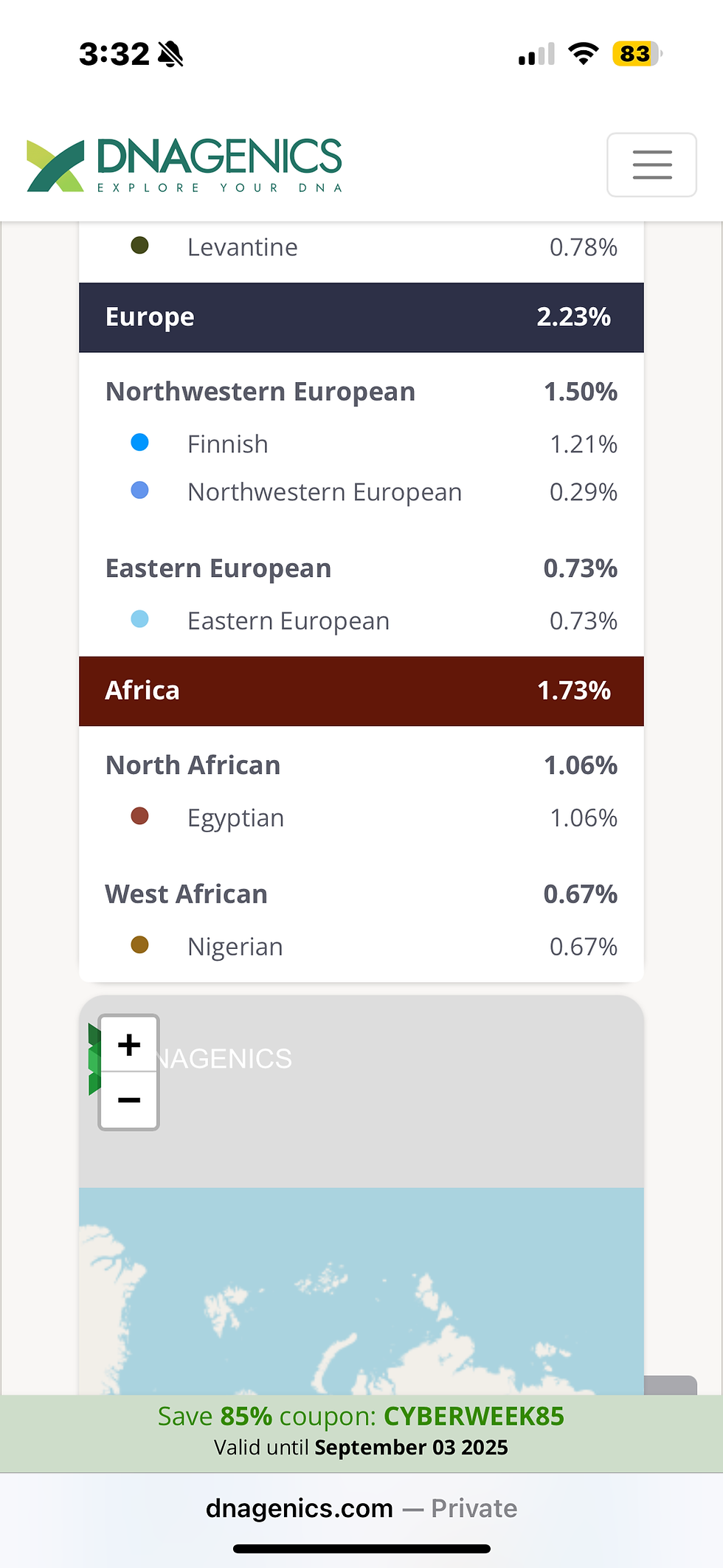

One of his ancient relatives is a woman buried in Vanuatu during the Proto-Historic era. Her genome was about 72% Melanesian/Papuan, combined with Southeast Asian ancestry (Chinese, Vietnamese, and Indonesian) and smaller traces of South Asian, Near Eastern, European, and African. She represents the early blending of Austronesian settlers from Islands in Southeast Asia with Indigenous Papuan-descended groups of Melanesia. This pattern mirrors Malagasy genetics, which combines Austronesian and African roots.

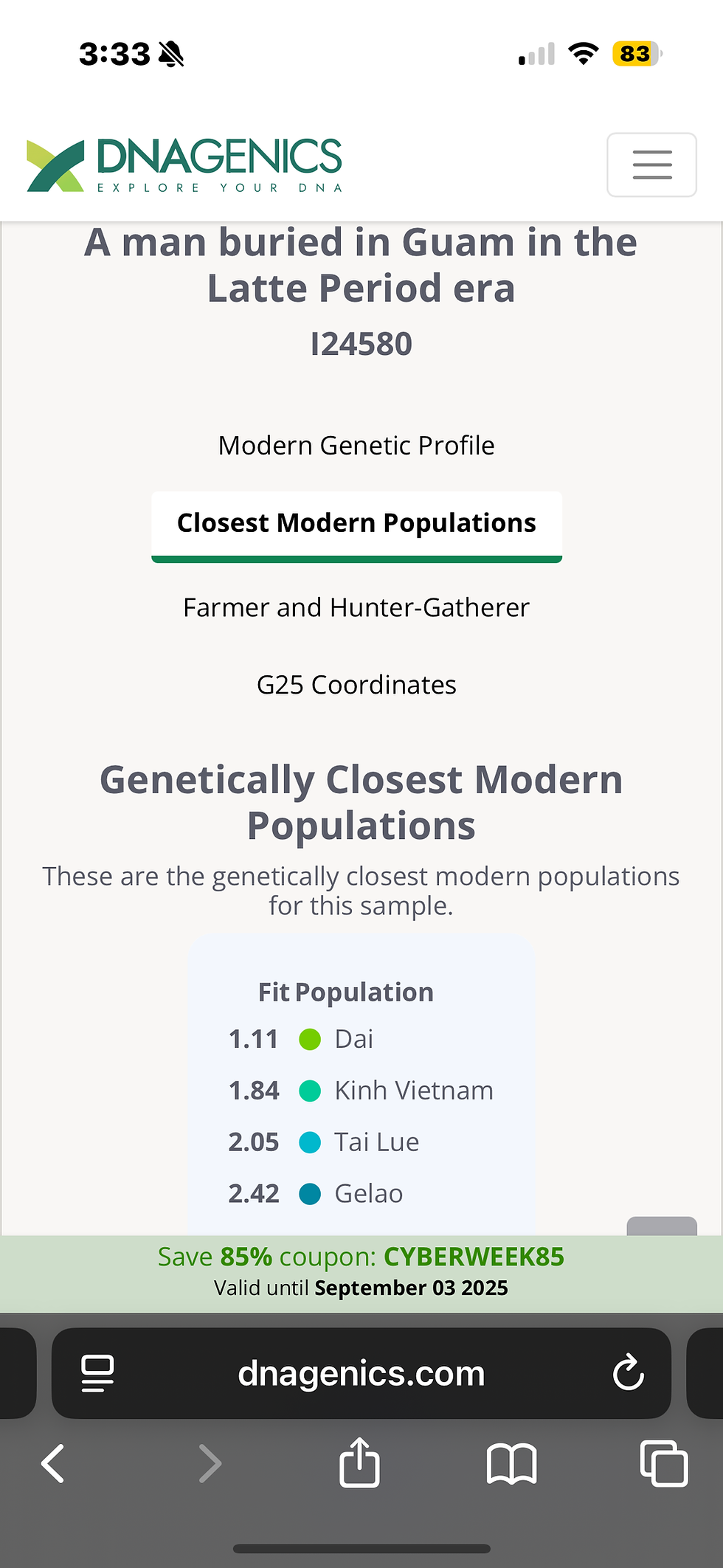
Another ancient relative is a man buried in Guam during the Latte Period. His ancestry was entirely East and Southeast Asian, with affinities closest to modern Chinese and Vietnamese populations. This reflects the Asian origins of the first Austronesian voyagers who settled in the Marianas over 3,500 years ago and maintained links across the Pacific.


The next DNA match is another Latte Period male from Guam, whose genome was about 95% East and Southeast Asian (Chinese and Vietnamese) but also carried about 4% Papuan/Melanesian ancestry and a very small trace of West African. His mixed profile shows how Austronesian voyagers carried both Asian and Oceanian ancestry as they moved through Micronesia.
Enslavement and the Indian Ocean Slave Trade
Tragically, Malagasy history also includes the painful legacy of slavery. While the Indian Ocean slave trade primarily supplied enslaved people to destinations across the Middle East, Persia, and the Indian Ocean islands, there were also documented cases of Malagasy captives being transported to the Americas (Turtle Island). Between 1670 and 1698, Malagasy were brought to New York, and between 1716 and 1721, approximately 1,500 Malagasy captives were sold into slavery in Virginia (Guasco, 2014). This lesser-known chapter of the transoceanic slave trade connects Madagascar not only to the Indian Ocean world but also to the early history of the Atlantic slave economy.
Global Malagasy Diaspora and Cultural Continuity
Though Madagascar is one of my ancestral homelands, Malagasy descendants can now be found across the world due to historical migrations, the Indian Ocean slave trade, and colonial-era movements. Today, Malagasy descendants live in:
• South Africa
• Seychelles, Mauritius, La Réunion, Comoros
• The Caribbean: Cuba, Jamaica, Barbados, and others.
• Latin America: Brazil, Argentina, and others.
• The United States: Particularly in the DMV area (Washington, D.C., Maryland, Virginia), and in New York/New Jersey, where entire African American communities proudly identify as Malagasy descent and continue to preserve aspects of our culture, including certain words, food traditions, and stories passed down through generations.
The Malagasy Presence in Early Colonial Virginia
Though most enslaved Malagasy were sent across the Indian Ocean, historical records show that hundreds of Malagasy captives were trafficked to British North America, particularly Virginia, between 1670 and 1721. Among them was “Madagascar Jack”, one of many Malagasy individuals enslaved on plantations owned by some of Virginia’s wealthiest planter families.
One of these planter families was the Carter family, headed by Robert “King” Carter, one of the largest landowners and slaveholders in colonial Virginia. In a letter written by Robert Carter on October 10, 1727, he refers directly to several enslaved individuals, including a Malagasy man known as “Madagascar Jack.” In this letter, Carter writes:
“…as for Madagascar Jack I will by no means have him go to the new design I have many reasons against it if he be gone order him down to Your quarter and keep him to work there until you have further orders from me… — Robert “King” Carter, Letter, 1727
This letter not only confirms the presence of Malagasy individuals like Jack in Virginia but also provides direct evidence of their forced labor on Carter’s plantations. Many of these individuals were among the earliest generations of enslaved Africans and Malagasy who built the wealth of early colonial elites.
Genealogical Connection: My Descent from Both the Enslaved and the Enslavers
In my genealogical article, I discuss my 5th-great-grandparents, Tasso and Minda Simpa/Simpo, who have recently been confirmed to be of Makua descent. In this excerpt, I talk about the connection between my Makua, along with other Bantu-speaking ancestors, and my Malagasy ancestors.
"It seems as though Tasso and Minda might've been brought here illegally after 1808. Both Minda and Tasso are documented as being born in Africa; their children were born in 1830 and after. What makes this a full-circle moment for me is realizing how it's very possible that my Makua ancestors were also on the same slave ships as my Malagasy ancestors because both were transported to the Americas via the Indian Ocean slave trade. It isn't lost on me that the relationship Mozambique has to Madagascar predates colonization. Some of my Bantu-speaking ancestors left Mozambique to settle in Madagascar, and they intermarried with my Southeast Asian ancestors who were already settled there to create what we know today as Malagasy people. Currently, there is a community of Makoa/Masombika who are descendants of Makua who migrated to Madagascar to escape slavery, as well as Makua who were enslaved in Madagascar. Another full circle moment is realizing how my Bakongo, Bamileke, Mbundu, and Malagasy ancestors are connected to my Makua ancestors via the Bantu expansion. Thousands of years ago, these ancestors all shared a common homeland, which is around the modern-day Cameroon-Nigeria border. My Bamileke ancestors stayed in Cameroon (prior to being in Cameroon, they were living around the Nile River). My Bakongo and Mbundu ancestors (a part of the Western Branch) settled along the Congo Basin and into Angola. My Makua ancestors (forming the Eastern Branch) migrated to the opposite side of the African continent, settling in modern-day Mozambique. Then later on, some of my aforementioned East African Bantu-speaking ancestors crossed the ocean via the Mozambique Channel into Madagascar, intermarrying with my Southeast Asian ancestors. During the Indian Ocean slave trade there were Makua, along with other Bantu-speaking peoples and Malagasy, who were enslaved in Southeast Asia such as in Indonesia and Malaysia. There were Indonesian, Malaysian, and people from the Indian Subcontinent enslaved in South Africa, Mauritius, Reunion, even including the Americas such as Virginia. This, of course, is a very simplified version of events."https://afroindigenousyesa.wixsite.com/nosyambiroa-1/post/genealogy-of-the-african-simpa-simpo-family-of-edgefield-south-carolina
I have a DNA match who has the maternal haplogroup M32c, meaning she descends from a Malagasy woman ancestor on her direct maternal line. Her furthest traced-back maternal ancestor is Odelle Crews (maiden name Kirkland), who was born in the early 1900’s in Henry, Alabama. I found a public 1920 census record for an Odell Kirkland in Dothan, Houston County, Alabama, who is a 7-year-old 'roomer' in the household of Marge Patman. Living next door is a Linnie Kirkland, who is a widow, and her 6-year-old daughter named Callie Kirkland. They could be relatives of Odelle. Could it be that Odelle’s parents died young and she basically became an informal foster child of the Patmans? Possibly, which could also explain why the paper trail ends at Odelle’s generation. My mother shares 20- 24 cM (if you include the unweighted 4 cMs) with Odelle’s descendant, and the DNA matches in common all descend from common ancestors: Rachel Smith and Isaac (also known as Spencer) Kirkland. Because of heavy endogamy and multi-generational intermarriage, I descend from these ancestors through multiple lines.
It is known that family surnames are Hollis, Brackins, and Kirkland due to Rachel (also known as Liddie) and Isaac (also known as Spencer), whose children were sold off to different enslavers. One branch of the family has the surname Speight.
"One slave couple, Liddie and Spencer Kirkland, had a family of 9 children... Liddie told her children that she had been bought in a market in Virginia and with a group of other slaves walked the full distance from Virginia... Spencer had been brought in from South Carolina. Some of their children were traded to some of the Kirklands, Brackins, and Hollises families in the area." - Henry County Historical Group
What makes it complicated is that Isaac and Rachel’s children, along with grandchildren, kept marrying people from the Kirkland, Brackins, Hollis (and also Trawick/Traywick) lines, which I also descend from. For example, my 2nd-great-grandfather Isiah Hollis married his cousin Rose Trawick (daughter of Tommy/Thomas Trawick and Lacy/Lucy Kirkland). According to family history, Mingo Trawick and his wife Rebecca Ward (parents of Tommy/Thomas Trawick) were also blood-related.
Isiah is the grandson of the aforementioned Isaac Kirkland and Rachel Smith through his father, Henry Hollis. Isiah's brother Elijah Hollis married Rebecca Trawick who was the daughter of Tommy/Thomas Trawick and Lacy/Lucy Kirkland, making her the sister of my ancestor Rose Trawick. Lacy/Lucy Kirkland, according to DNA matches and census records, would be the granddaughter of Isaac Kirkland and Rachel Smith through her father, Richard Kirkland, or she might come from another Kirkland who connects to this line. Rebecca's second husband was Weed Brackins, whose father was Irving (Irwin) Brackin and Ellen Holland Brackin. Irving Brackin is the son of Isaac Kirkland and Rachel Kirkland (or Rachel Smith). My ancestor Henry Hollis' wife is Mary Kirkland (Galloway could be a surname she inherited from another marriage).


Isiah Hollis (my 2nd great-grandfather) is described by descendants as having very long hair, which was unusual for men during this time period. Descendants associate his long hair with Native lineage, but it is also possible this long hair could be from his Malagasy lineage. In Dr.Wendy Wilson-Fall's book titled Memories of Madagascar and Slavery in the Black Atlantic, she discusses oral history from a family in New Haven, Connecticut, who descends from a Malagasy male ancestor with long hair and darkskin who was a seaman/whaler. Culturally, there have been beliefs within certain ethnic groups around men keeping their hair long and wearing braids.


1) If Odell Kirkland descends directly from Rachel Smith on a direct maternal line, which would mean Rachel was of Malagasy descent. According to family oral history, Rachel (also known as Liddie) was born in Virginia, sold at a slave market, and forced to walk on foot from Virginia to Alabama. It is documented that in the 1700’s there were multiple Malagasy people trafficked to Virginia and enslaved there. Odelle would’ve inherited the Kirkland name from a Kirkland male ancestor who descends from Spencer Kirkland.
2) Her paternal line does go back to Spencer Kirkland, but her direct maternal line comes from a different female ancestor who married into the Kirkland line. It could either be an unrelated female line that I’m not related to, or it could be (due to endogamy) another female ancestor who also descended from the Kirkland line.
Note: These are just theories. There’s no way to know with 100% certainty the scenario until or if Odelle’s parents and maternal grandparents are able to be confirmed. But I do want to note that descendants of this line are getting Southeast Asian and eastern/southern Bantu in their ethnicity estimates, some Malagasy genetic communities on 23andMe. And DNA matches with living Malagasy people on their maternal side. This confirmed Malagasy lineage on this line of the family. It's likely that if this direct maternal line doesn’t connect to mine, there is likely another female ancestor on this side who was of Malagasy descent. Or it could be more than one Malagasy-descended ancestor as well. As more direct descendants DNA test and learn their haplogroups, it will give us more answers.


This is the 23andMe DNA map and ancestry timeline of a second cousin, also a direct descendant of Joseph Mitchell. The West African, Northwestern European, Angolan & Congolese, Southern East African, Filipino & Austronesian, Indonesian, Thai, Khmer, & Myanmar, as well as Indigenous American ancestry, all represent genetic inheritance from Joseph Mitchell. The combination of Indigenous American, Malagasy (which includes Southeast Asian and East African), and Angolan & Congolese ancestry found in Joseph Mitchell and his descendants originated from a multiracial Malagasy ancestor who lived in the early 1800s (so one of Joseph Mitchell's parents). There was also an illegal slave trade in which Malagasy people were brought to Turtle Island illegally. While 23andMe places ancestors with these ancestries between 1690 and 1780. Joseph and his descendants continued to marry into multi-generational Afro-Indigenous families who also carried West African, Native American, Malagasy, and European ancestry, further reinforcing these genetic lineages and making the 23andMe timeline estimates less precise across generations. To learn more about the Mitchell line and my other Afro-Indigenous ancestors, feel free to read my article, which I published on this website.


Hery Best, my great-granduncle, is listed in the 1910 census as a 2-year-old with the name Hery, likely said to the census-taker by his parents. This name is of Malagasy origin, meaning “strength, force, [or] power” (Behindthename.com). On the same census page, recorded on the same day by the same census taker, other individuals (who lived on the same street as my ancestors) are documented as Henry, indicating that the enumerator was familiar with the standard spelling and intentionally wrote Hery. In the 20th century, Henry was a very common name, making it very unlikely to be misspelled. In other records, when he is older, he is listed as Henry, which is likely an anglicization of the name Hery. Hery’s family also has interesting and uncommon names, including his brother Affie/Offie and his grandfather, my 3rd great-grandfather, Arow. This could also explain the East African and Southeast Asian admixture in relatives on this side of the family who have DNA tested.

As a Malagasy descendant, my family’s history intertwines with both the enslaved Malagasy brought to Virginia and the powerful settler families who enslaved them:
• Robert “King” Carter (1663–1732) — He was mentioned earlier in this article. One of Virginia’s wealthiest colonial planters and one of my distant ancestors through later interracial unions, both during and after slavery.
• The Burwell family — Another prominent Virginia planter family, deeply involved in slavery, who intermarried with the Carters and were also my ancestors.
Among my parents’ closest DNA matches on 23andMe are descendants of Malagasy families with the surnames Carter, Brown, Clark, and Lewis. They are also connected by DNA to families named Ragsdale, Ragland, Lee, Burwell, Meriweather, Randolph, and Dandridge, among others.
As Dr. Wendy Wilson-Fall writes in Memories of Madagascar and Slavery in the Black Atlantic, “The African American family surnames of self-described descendants of Malagasy slaves, said to have been inherited from slavery times, are shared with the biggest Virginia planters of the colonial era: Randolph, Carter, Lee, Ragland, Ragsdale, Brown, Meriweather, Lewis, Dandridge (the maiden name of George Washington’s wife), and Catlett. Interestingly, there are no Burwells. Perhaps slaves inherited from Carter by the Burwell family retained the Carter name. There are also African Americans claiming Malagasy ancestry with the surnames Belsches, Beckinridge, and Steptoe, Virginia planters less widely known today, nonetheless connected by kin and social convention to the families listed above.”
Ethnic Diversity in Madagascar
Madagascar’s population today is composed of approximately 20 distinct ethnic groups, each with its own traditions, beliefs, and dialects, yet united by the Malagasy language and cultural identity. Broadly, these groups are often categorized into:
• The Highlanders (Hautes Terres): Merina (my mom has lineage from them), Betsileo, and Sihanaka.
• The Coastal Groups: Antaifasy, Antaimoro, Antaisaka, Antambahoaka, Antandroy, Antankarana, Antanosy, Bara, Betsimisaraka, Bezanozano, Mahafaly, Makoa, Mikea, Sakalava, Tanala, Tsimihety, and Vezo.
Despite these differences, we all share a common Malagasy identity rooted in a remarkable historical fusion of peoples.
Austronesian Origins: The Southeast Asian Connection
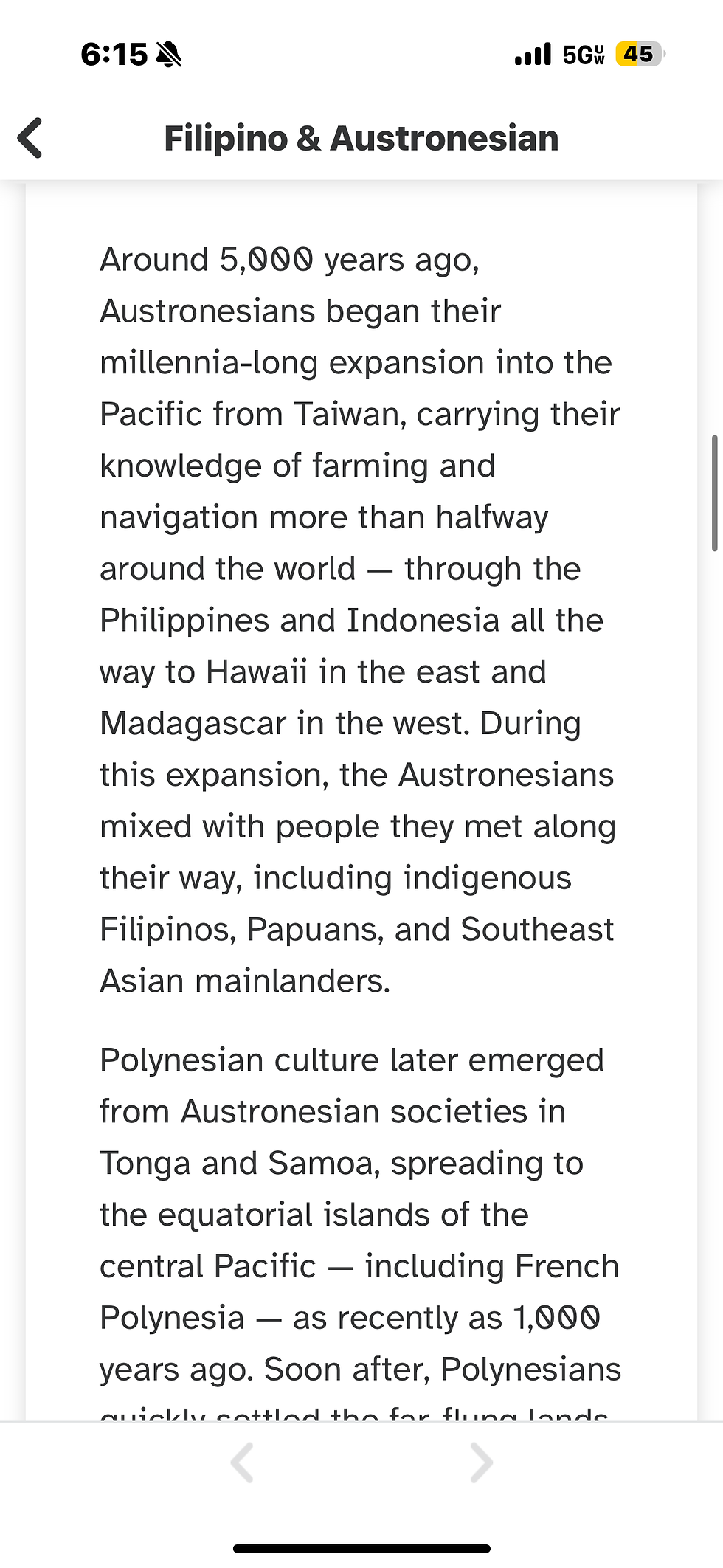
Linguistic, genetic, and archaeological evidence points to our Austronesian ancestors originating from Southeast Borneo (modern-day Indonesia), particularly among the Ma’anyan people of the Barito River region in Kalimantan. The Malagasy language itself belongs to the East Barito subgroup of the Austronesian language family, closely related to Ma’anyan, Paku, and other languages of southern Borneo. Studies suggest that early Austronesian sailors arrived in Madagascar between 500 and 800 CE, likely transported as part of the extensive maritime trading networks operated by Malay and Javanese merchants (Adelaar, 2009; Beaujard, 2011).

The linguistic ties between Malagasy and other Austronesian languages are evident in shared vocabulary, grammatical structures, and even cultural expressions. For example, the Malagasy word aloha means “before” or “first,” while in Hawaiian (another Austronesian language), aloha famously means “love,” “hello,” or “goodbye.” This linguistic parallel highlights the ancient connection between peoples separated by thousands of miles across the Indian and Pacific Oceans.
Interestingly, in recent years, Native Hawaiians (Kanaka Maoli) have created traditional lei using Jasmine sambac, a flower indigenous to Madagascar, symbolically reconnecting these distant branches of the Austronesian family.

African Roots: Bantu Migrations and Coastal Connections
While the Austronesian influence is foundational, my Malagasy ancestry also reflects significant East African Bantu contributions. Genetic studies show that Bantu-speaking groups from southeastern Africa migrated to Madagascar through the Mozambique Channel, blending with Austronesian settlers and contributing to the island’s cultural and genetic makeup.
The East African groups related to the Malagasy include:
• Mozambique: Shangana, Tsonga.

• Tanzania: Sukuma, Nyamwezi, Gogo, Swahili.

• Kenya (Coastal): Mijikenda, Pokomo, Taita.

• Malawi (partially related): Yao, Lomwe.
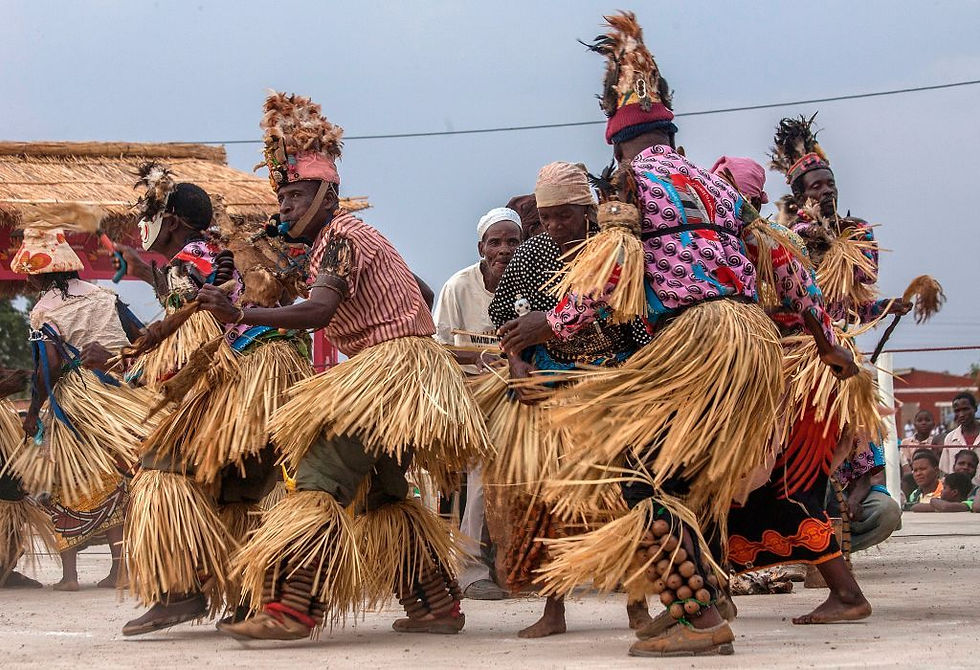
The Bantu contribution enriched Malagasy culture with new agricultural techniques, ironworking, music, and religious practices.
Broader Austronesian and Related Connections
Beyond East Africa and Borneo, the Malagasy people also share ties with several other Austronesian and related groups, reflecting the wide geographic reach of Austronesian migrations:
• Dayak Ma’anyan (Borneo)
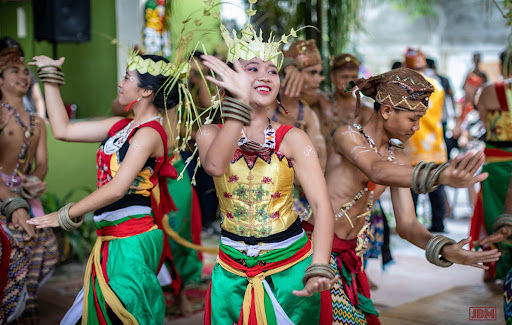
• Banjar (Southeast Kalimantan)

• Lawangan (Central Kalimantan)
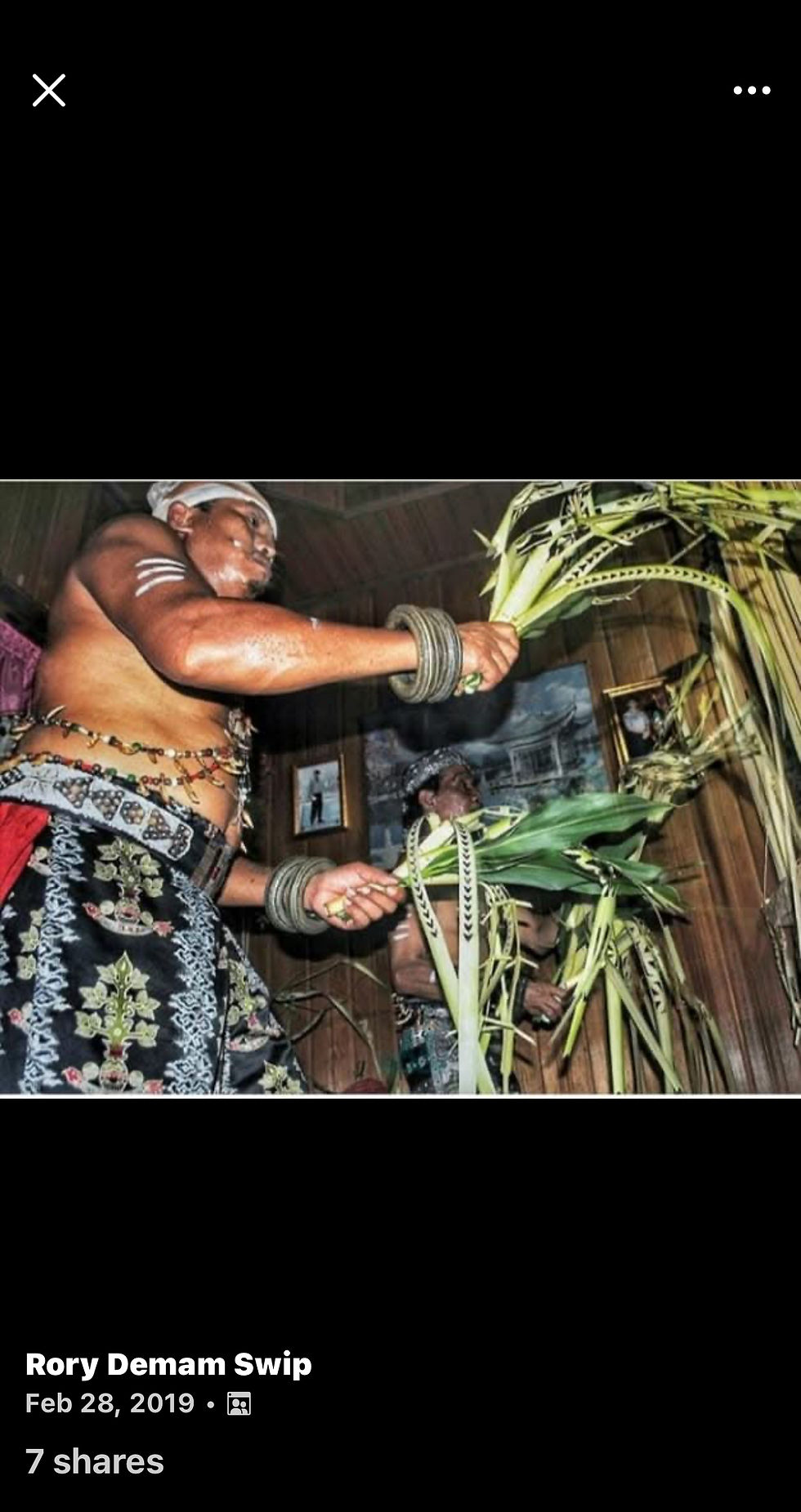
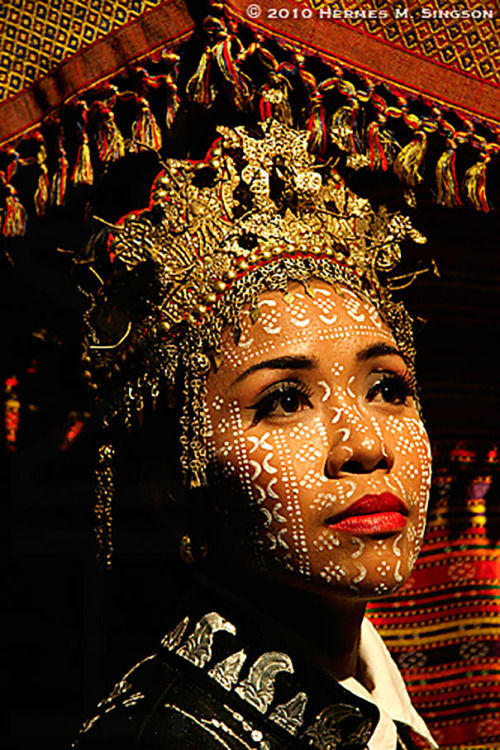
• Dusun (North Borneo, Malaysia)

• Yakan (Philippines)
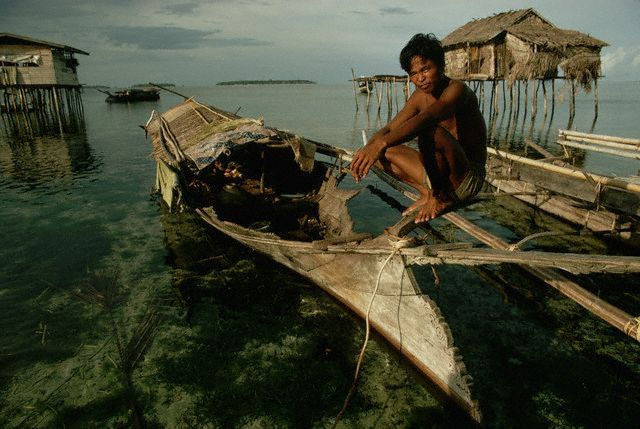
• Sama-Bajau (Philippines)
• Ambonese and Moluccans (Eastern Indonesia, with Melanesian admixture)
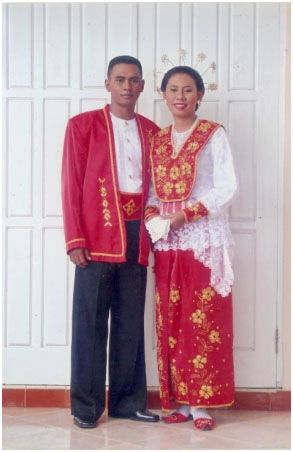
This broader Austronesian family shows how Malagasy origins are part of one of the most extensive human dispersals across the Indian and Pacific Oceans.
A Unique Island Civilization
As a Malagasy descendant, I am proud to descend from such beautiful and remarkable peoples. I cannot fathom the horrors that they experienced, but it is for their resilience and strength that I am grateful to inherit.
Works Cited
• Adelaar, K. A. (2009). Towards an integrated theory about the Indonesian migrations to Madagascar. In S. Adelaar & M. Pawley (Eds.), Austronesian historical linguistics and culture history (pp. 149-166). Pacific Linguistics.
• Beaujard, P. (2011). The first migrants to Madagascar and their introduction of plants: Linguistic and ethnological evidence. Azania: Archaeological Research in Africa, 46(2), 169-189.
• Guasco, Michael (2014). Slaves and Englishmen: Human Bondage in the Early Modern Atlantic World. University of Pennsylvania Press.
• Ethnologue (2024). Austronesian languages summary. SIL International.
• Hurles, M. E., et al. (2005). The dual origin of the Malagasy in Island Southeast Asia and East Africa: evidence from maternal and paternal lineages. American Journal of Human Genetics, 76(5), 894-901.
• Blench, R. (2009). Banjar and the Malagasy: The evidence for an early migration from south-east Borneo to Madagascar. Paper presented at the ICEAL.


Comments